




At a Glance: Fuel efficiency is one of the biggest factors in a truck driver’s bottom line. With diesel fuel prices always changing, choosing the right semi truck can mean the difference between profit and loss over thousands of miles.
Spending too much on fuel every month? You are not alone. Fuel consumption is one of the highest operational costs in the trucking industry, and it only gets harder to manage when fuel prices spike without warning. The good news is that newer models of commercial trucks are designed with fuel economy in mind, and the right driving habits can stretch every gallon even further.
This guide covers the top fuel-efficient semi trucks on the market, what features drive better fuel economy, and practical tips that every professional driver and fleet manager can use to cut fuel costs on the road.
Top Fuel-Efficient Semi Trucks on the Market
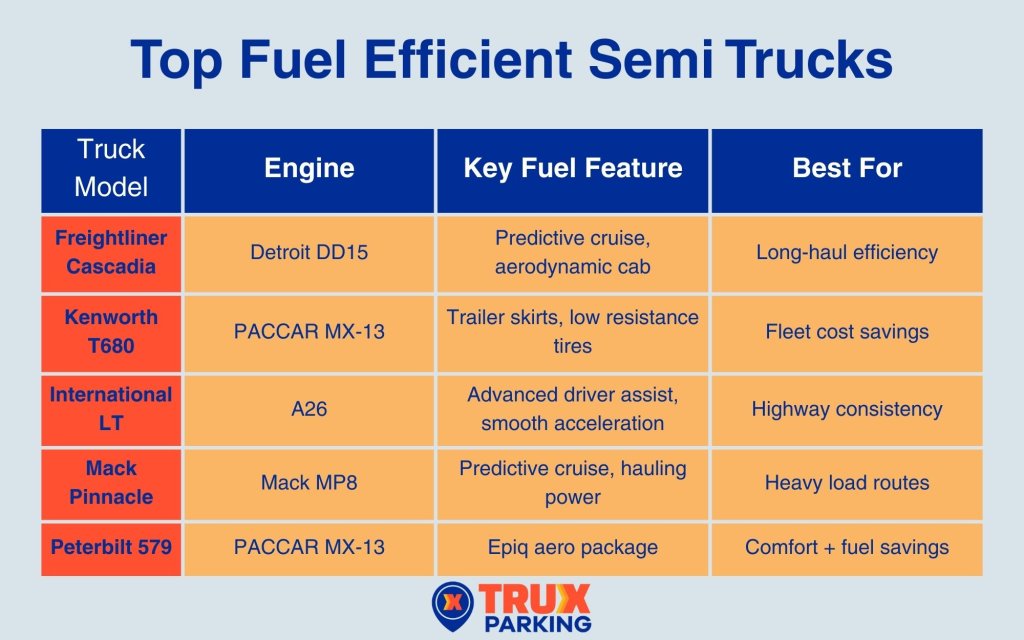
Several manufacturers have invested heavily in aerodynamic design, engine efficiency, and lightweight materials to produce trucks that use less fuel without sacrificing power. Here is a look at the leaders.
Freightliner Cascadia
The Freightliner Cascadia Evolution is widely recognized as one of the most fuel-efficient semi trucks in North America. Its integrated Detroit DD15 engine, paired with the Detroit DT12 automated transmission, delivers impressive fuel economy on long-haul routes. The Cascadia’s aerodynamic features, including a sloped hood and optimized bumper design, work together to reduce wind resistance and improve freight efficiency.
Freightliner has continued to refine the Cascadia with each model year, adding predictive cruise control and aerodynamic upgrades that push fuel savings even further.
Kenworth T680
The Kenworth T680 is another top pick among professional drivers who want better fuel economy. Built around the PACCAR MX-13 engine, this heavy-duty truck balances power with efficiency. Its cab design minimizes drag, and available options like trailer skirts and low rolling resistance tires help drivers go the extra mile on every tank.
Fleet managers appreciate the T680 for its reliability and lower total cost of ownership, making it a smart long-term investment.
International LT
The International LT is built with fuel savings at its core. Its A26 engine and aerodynamic cab profile deliver strong fuel economy numbers across a range of road conditions. The International LT also offers an advanced driver assistance package that supports smooth acceleration and consistent speed, two of the most effective ways to reduce fuel usage on the highway.
Mack Pinnacle
The Mack Pinnacle is a solid choice for drivers who regularly handle a heavy load. While it is built for durability and hauling power, Mack has made meaningful improvements to its fuel economy in recent years. Features like the Mack MP8 engine and predictive cruise control help this truck compete with lighter models when it comes to fuel efficiency.
Peterbilt 579
Peterbilt’s 579 rounds out the list with its combination of driver comfort and fuel-saving technology. Powered by the PACCAR MX-13 engine, the 579 features an aerodynamic cab and optional low rolling resistance tires to reduce fuel consumption on long hauls. Its Epiq package adds further aerodynamic upgrades for drivers looking to maximize savings.
What Makes a Semi Truck Fuel Efficient?
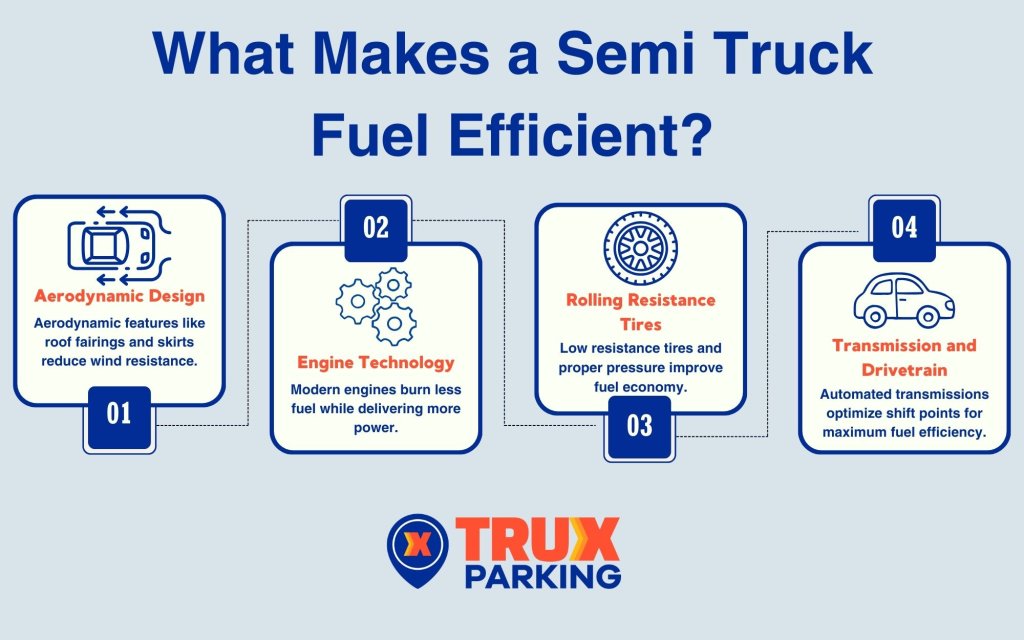
Understanding what drives fuel efficiency helps when comparing models or upgrading your current rig. Several factors work together to determine how far a truck can go on a gallon of diesel.
Aerodynamic Design
Wind resistance is one of the biggest enemies of fuel economy at highway speeds. Trucks with aerodynamic features like rounded cab edges, roof fairings, side skirts, and trailer skirts cut through the air more efficiently. Even small aerodynamic upgrades can lead to significant fuel savings over the course of a year.
Engine Technology
Modern engines are designed to produce more power while burning less fuel. Features like variable valve timing, turbo compounding, and optimized combustion cycles help newer models squeeze more miles out of every gallon. The PACCAR MX-13 engine, for example, has become a favorite in the industry for balancing performance and fuel consumption.
Rolling Resistance Tires
Semi truck tires play a bigger role in fuel efficiency than many drivers realize. Low rolling resistance tires reduce the energy needed to keep the truck moving at a consistent speed. Tire pressure monitoring systems add another layer of protection against wasted fuel, since underinflated tires increase drag and wear.
Transmission and Drivetrain
Automated transmissions have largely replaced the manual transmission in fuel-efficient fleets. These systems optimize shift points to keep the engine in its most efficient range, reducing fuel usage on both highways and city routes. Some trucks also offer rear axle ratios designed specifically for long-haul fuel economy.
Tips to Improve Semi-Truck Fuel Efficiency on the Road
The truck itself is only part of the equation. How you drive and maintain your rig makes a major impact on fuel costs. Here are practical steps any professional driver can take.
- Maintain consistent speed using cruise control whenever road conditions allow. Steady speeds reduce fuel consumption more than frequent acceleration and braking.
- Practice smooth acceleration instead of rapid throttle changes. Aggressive driving burns significantly more diesel fuel per mile.
- Stay on top of regular maintenance, including oil changes, air filter replacements, and fuel system inspections. A well-maintained engine runs more efficiently.
- Check tire pressure before every trip. Properly inflated semi truck tires reduce rolling resistance and improve fuel economy.
- Reduce idle time when parked. Excessive idling wastes fuel without moving you a single mile down the road.
- Plan routes that minimize stop-and-go traffic. Highway miles at steady speeds are always more fuel-efficient than city driving.
Driver training programs that focus on fuel-efficient driving habits can produce substantial savings across an entire fleet. Even experienced drivers benefit from refreshers on techniques like progressive shifting and anticipating traffic flow.
Alternative Fuel Options for the Future
The transportation industry is evolving, and alternative fuel options are becoming more practical each year. Several manufacturers now offer natural gas-powered semi trucks that produce lower emissions and, in some cases, lower fuel costs compared to traditional diesel. Electric semi trucks, like the Tesla Semi and the Freightliner eCascadia, are entering production and show real promise for shorter regional routes.
While fully electric long-haul trucks are still developing, hybrid systems and alternative fuels give fleet managers more choices for managing operational costs and meeting environmental goals. Keeping an eye on these developments helps professional drivers and fleet operators stay ahead of the curve.

Safe, Secure Parking: The TRUX Parking Solution
After a long haul focused on maximizing fuel efficiency, you need a safe place to park and rest. Finding secure overnight parking is one of the biggest challenges professional drivers face on the road. Public lots and truck stops often lack reliable security, and available spots fill up fast.
TRUX Parking solves this problem with secure facilities designed for commercial trucks, including semi trucks of all sizes. Every TRUX location features the following amenities.
- Electronic gated access via mobile phone
- 24/7 security cameras and surveillance
- Industrial lighting and perimeter fencing
- Wide lanes and stabilized yard surfaces for easy maneuvering
- Flexible daily and monthly parking options with no contracts
With locations across multiple states, TRUX gives truck drivers a consistent, dependable place to park between runs. Use TRUX for overnight stops or extended downtime between loads. Reserve your spot online and receive instant access instructions. After a day spent saving on fuel costs, you deserve a home away from home.
Visit our secure facilities in: