



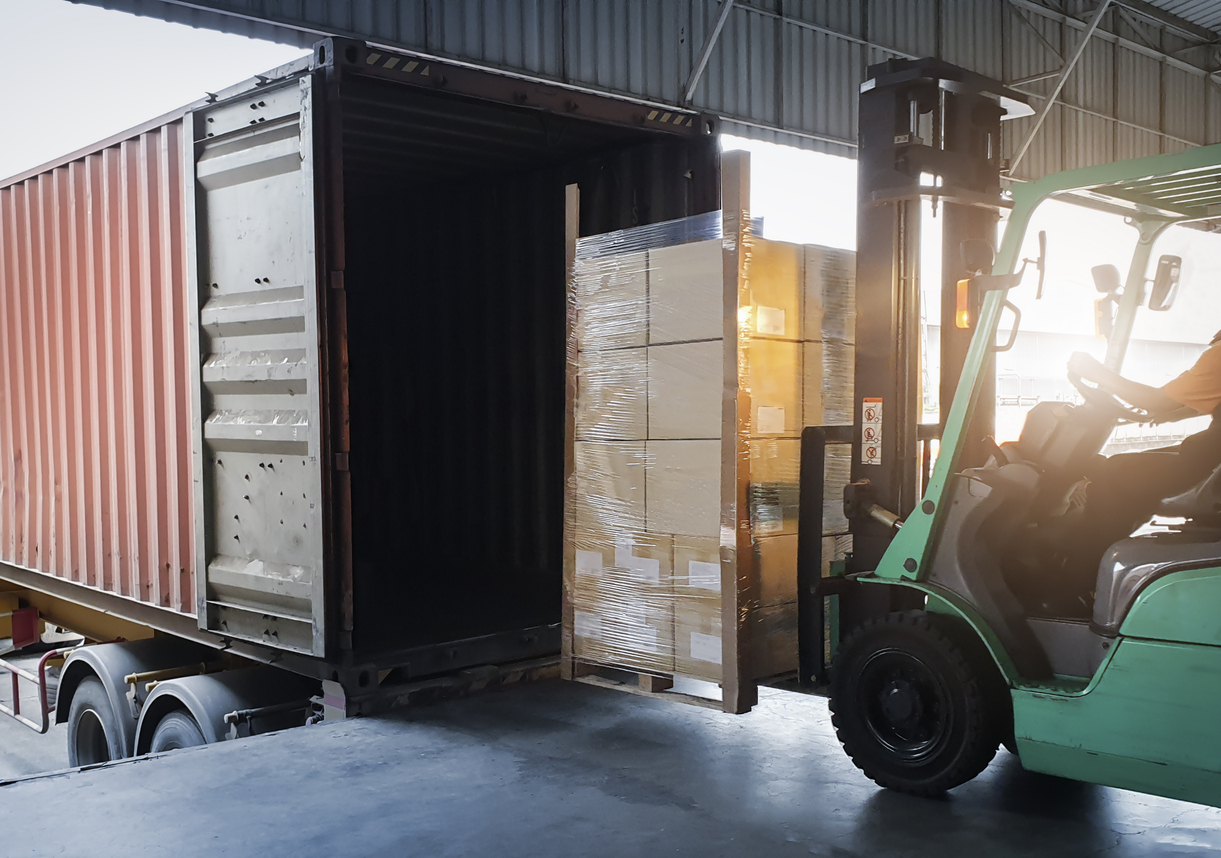
At a Glance: A lumper fee is a charge paid to third-party workers who unload or unload freight at warehouses and distribution centers. Professional drivers encounter lumper fees regularly at grocery distribution warehouses and large retail facilities. Understanding who pays, how to get reimbursed, and why a lumper receipt matters can save you time and frustration at the dock.
This guide breaks down everything professional drivers and trucking companies need to know about lumper fees, how they work, and what to expect at the dock.
Who Are Lumpers?
Lumpers are third-party workers who specialize in loading and unloading commercial freight. Unlike the motor carrier’s drivers or the warehouse’s own staff, lumpers work for a separate service provider that contracts directly with the facility to supply labor as needed.
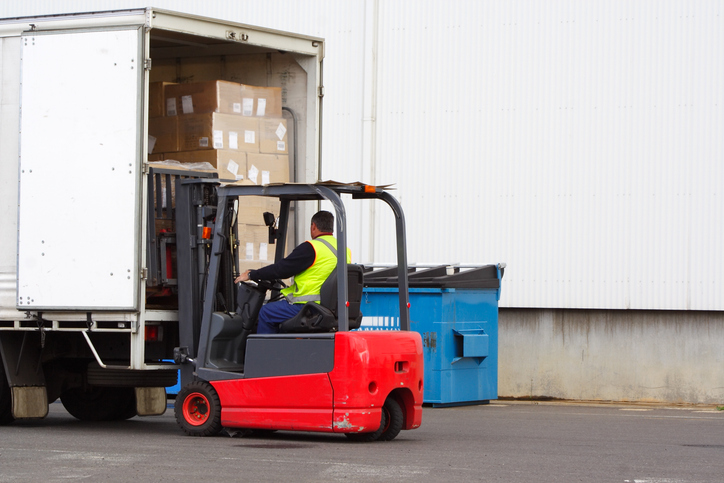
Depending on the facility, lumpers may unload an incoming trailer, load an outbound one, sort and palletize freight, or handle a combination of all three. Common equipment used includes pallet jacks, hand trucks, and forklifts.
Lumper fees are especially common at:
- Grocery distribution warehouses
- Large retail distribution centers
- Frozen and refrigerated food facilities
- High-volume import warehouses
The Basics of a Lumper Fee
When a truck arrives at a warehouse or distribution center, someone has to physically move the freight off the trailer. At many facilities, that job does not fall on the driver or the warehouse’s own staff. Instead, a separate crew of workers called lumpers handles the loading or unloading, and the cost of that labor gets passed along as a lumper fee.
These third-party workers are typically hired through a lumper service, which contracts with the warehouse or distribution center to provide on-demand crews. The lumper charge covers the labor cost of moving freight from the trailer onto the dock, sorting it by pallet, and often putting it away in the warehouse. On outbound loads, lumpers may also be responsible for loading freight onto the trailer before a driver departs.
Why Do Lumper Fees Exist?
Warehouses and distribution centers, especially grocery warehouses, use lumper services because it keeps their own labor costs down. Instead of hiring full-time staff to handle every incoming and outgoing load, they outsource the work to a third-party company that provides crews on demand.
For the trucking industry, lumper fees became common because many carrier agreements and shipping contracts prohibit drivers from loading or unloading freight themselves. This protects drivers from injury liability and keeps loading and unloading responsibility with the warehouse side of the transaction.
How Much Does a Lumper Fee Cost?
Lumper fees vary widely depending on the load size, the type of freight, the distribution center, and the location. A light partial load at a smaller facility will cost significantly less than a full truckload of mixed pallets at a high-volume distribution center.
Some facilities charge a flat rate per load. Others bill by the hourly rate or by the number of pieces handled. At grocery distribution warehouses, fees tend to be higher because of the physical demands of the work and the specialized environment.
Factors that push the lumper fee higher include:
- Full truckloads versus partial loads
- Frozen or perishable goods that require working in cold environments
- Mixed pallets that require additional sorting
- High-volume metro distribution centers with faster turnaround expectations
- Hourly billing structures instead of flat fees
Who Pays the Lumper Fee?
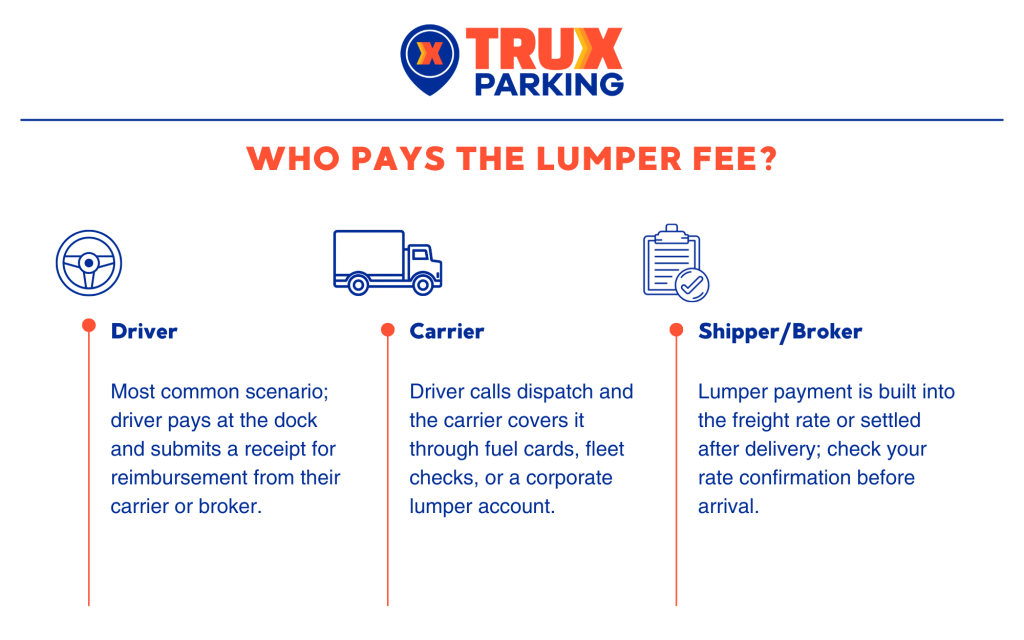
This is one of the most common questions in the trucking industry, and the answer depends on the specific agreement between the shipper, the freight broker, and the motor carrier.
When the Driver Pays Up Front
In many situations, professional drivers are asked to pay the lumper fee at the dock out of pocket. This is standard practice at many distribution centers. The driver pays the third-party workers directly, gets a lumper receipt, and then seeks reimbursement from their trucking company or freight broker.
When the Carrier Pays
Some trucking companies cover lumper fees as part of their operating costs. The driver notifies dispatch, and the carrier pays the lumper service through fuel cards, fleet checks, or a corporate account set up with the lumper service.
When Shippers or Brokers Cover the Cost
In other cases, the lumper fee is included in the freight agreement. Shippers may build the cost into the freight rate, or brokers may advance payment or reimburse the carrier during load settlement. Always check your rate confirmation before arriving at a facility.
Common Ways to Pay a Lumper Fee
The payment process at the dock has changed over the years. Here are the most common methods professional drivers encounter:
- Cash: Driver pays the lumper crew directly at the dock
- Fleet check: Carrier provides a special check drawn against a lumper account
- Fuel card or express code: Some carriers load lumper funds onto a driver’s fuel card or issue an express code tied to a third-party payment network
- EFS or Comdata: Digital transaction systems used widely in the trucking industry to handle lumper payments remotely through dispatch
- Credit card: Less common but accepted at some facilities
Ask your dispatcher before arriving at a new distribution center to confirm how your carrier handles lumper payments. Running out of options at the dock creates delays and stress you do not need after a long drive.
The Lumper Receipt: Why It Matters
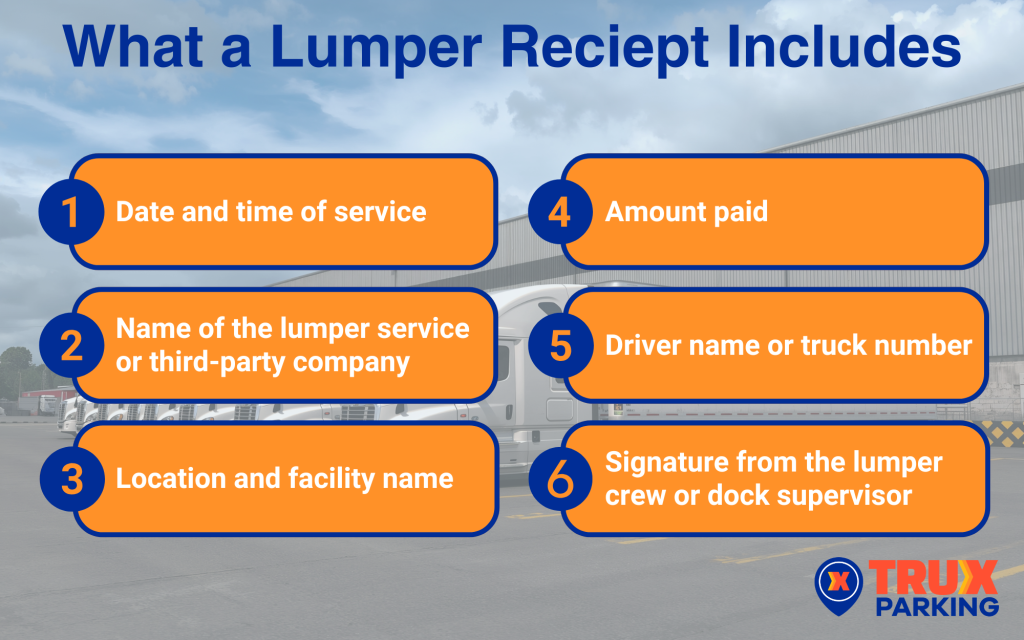
Always get a lumper receipt. It is proof that you paid the lumper fee and that the loading or unloading service was completed. Without it, you have no documentation to support a reimbursement request from your carrier or freight broker. A valid receipt needs to show the date and time of service, the name of the lumper service, the facility location, the amount paid, your name or truck number, and a signature from the lumper crew or dock supervisor. Missing any of these makes the receipt harder to use for reimbursement or a future dispute.
Keep the original and make a copy or take a photo with your phone. Submit the receipt to your dispatcher or carrier as part of your load paperwork. Some carriers require it for payroll processing, and if there is ever a dispute or an insurance claim related to the load, your lumper receipt is part of the paper trail.
How Lumper Reimbursement Works
If you paid a lumper fee out of pocket, reimbursement typically comes through your carrier’s settlement process. Here is the general flow:
- You pay the lumper fee at the dock
- You collect and keep the lumper receipt
- You submit the receipt to your dispatcher or carrier after delivery
- The carrier processes the reimbursement as an additional cost on your settlement
Timing varies by carrier. Some reimburse within the same pay period. Others process lumper payments on a separate schedule. If you are an owner-operator working with a freight broker, confirm reimbursement terms before accepting the load.
Know Your Carrier’s Payment Process Before You Arrive
Some carriers issue express codes or use digital transaction systems like EFS or Comdata to front lumper costs so drivers never have to pay out of pocket in the first place. Ask your carrier what their process is, so you are not caught off guard at different locations.
Are Lumper Fees Required by Law?
Lumper fees are not mandated by federal law, but they are addressed under the United States Code in the context of carrier liability and freight claims. Under federal regulations, motor carriers are generally responsible for paying lumper fees when required to complete a delivery, though the specific terms depend on the shipper contract and rate agreement.
The Federal Motor Carrier Safety Administration (FMCSA) provides guidance on carrier obligations at delivery points. If you have questions about your specific situation, reviewing your carrier agreement and the terms of the rate confirmation is the right starting point.
Tips for Professional Drivers Dealing With Lumper Fees
Here are some practical steps to make the lumper fee process go smoothly at any facility:
- Check your rate confirmation before arrival to see if lumper fees are noted
- Call dispatch before pulling into the facility to confirm the payment method
- Always ask the dock manager for a lumper receipt before leaving the dock
- Take a photo of the receipt as backup before submitting originals
- Document any damage or discrepancies during the unloading process
- Know your carrier’s reimbursement timeline so you can budget accordingly
- If your carrier uses EFS, Comdata, or fleet checks, confirm the balance before arrival
TRUX Parking: Secure Stops Between Every Load
Lumper fees, tight dock windows, long unload times, and unexpected delays are all part of the job. What should not add to your stress is finding a safe place to park before or after a delivery.
Every TRUX location is built for professional drivers, with features like: electronic gated access, 24/7 camera surveillance, industrial lighting, perimeter fencing, and flexible daily or monthly plans with no contracts or hidden fees. Book online and get your access instructions before you even roll in.
Find a TRUX location near you:
- Georgia
- Tennessee
- Alabama
- Texas
- Missouri
- Idaho
- Mississippi
- Arkansas
- Oklahoma
- Ohio
- California
- Utah
- Pennsylvania
- North Carolina
- Florida
- Oregon
- Nevada
- South Carolina
- Arizona
Book your spot today at truxparking.com and get instant access instructions. Your home away from home is waiting.