


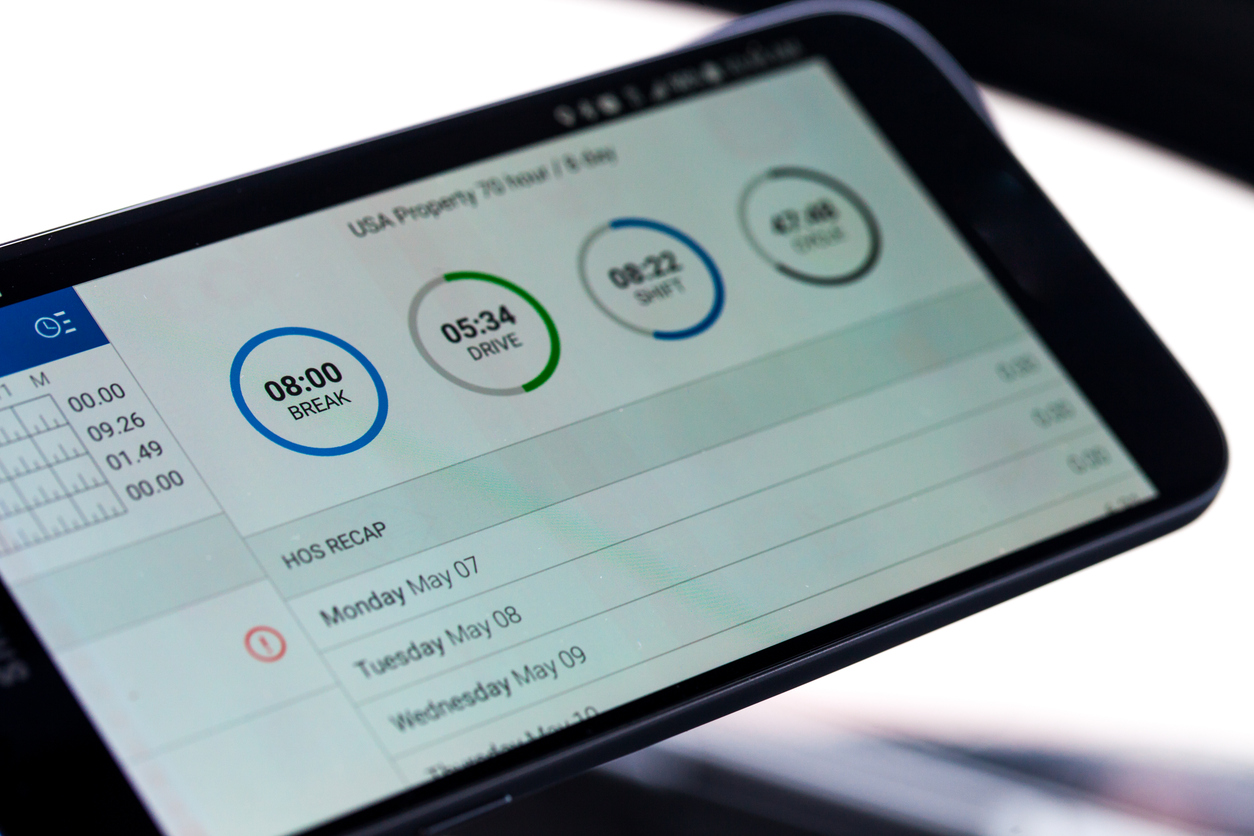
At a Glance: The ELD (electronic logging device) mandate is a federal regulation that requires commercial motor vehicle drivers to use an electronic logging device instead of paper logs to record their hours of service. Issued by the Federal Motor Carrier Safety Administration, the rule applies to motor carriers operating in interstate commerce across the United States. The mandate aims to reduce hours-of-service violations, support driver safety, and create a safer work environment. This guide covers who must comply, how an electronic logging device works, common exemptions, and what to look for in a compliant ELD.
What Is the ELD Mandate?
Congress laid the groundwork for the ELD mandate in 2012 with the Moving Ahead for Progress in the 21st Century Act (MAP-21). This law directed the FMCSA to develop a rule requiring electronic logs on commercial vehicles. The agency spent the next several years drafting and refining the regulation in response to long-standing concerns about falsified paper logs, driver fatigue, and the crashes tied to both. An ELD pulls data straight from the vehicle’s engine, so altering a record of duty status after the fact is far harder than it ever was with a paper log book.
The ELD rule was published as a final rule in December 2015, with a phased rollout. Full enforcement took effect in December 2019. At that point, older tracking systems known as automatic onboard recording devices (AOBRDs) had to be replaced with fully compliant ELDs. The transition phase gave motor carriers and ELD providers time to adapt.
Who Must Comply with the ELD Mandate?
The ELD rule centers on hours-of-service tracking. Whether the rule applies to you comes down to two factors: the kind of vehicle you drive and where you drive it.
You need a compliant ELD when both of the following are true:
- You operate a commercial motor vehicle that meets the size or cargo thresholds listed below
- You drive in interstate commerce, meaning your route crosses state lines
If you’ve been keeping a paper log book, the same rules now require you to keep that log electronically while still keeping blank paper RODS sheets onboard as a backup if the ELD fails. The exemptions later in this guide cover the handful of situations where a driver can stay on paper or skip logging altogether.
Vehicles Covered
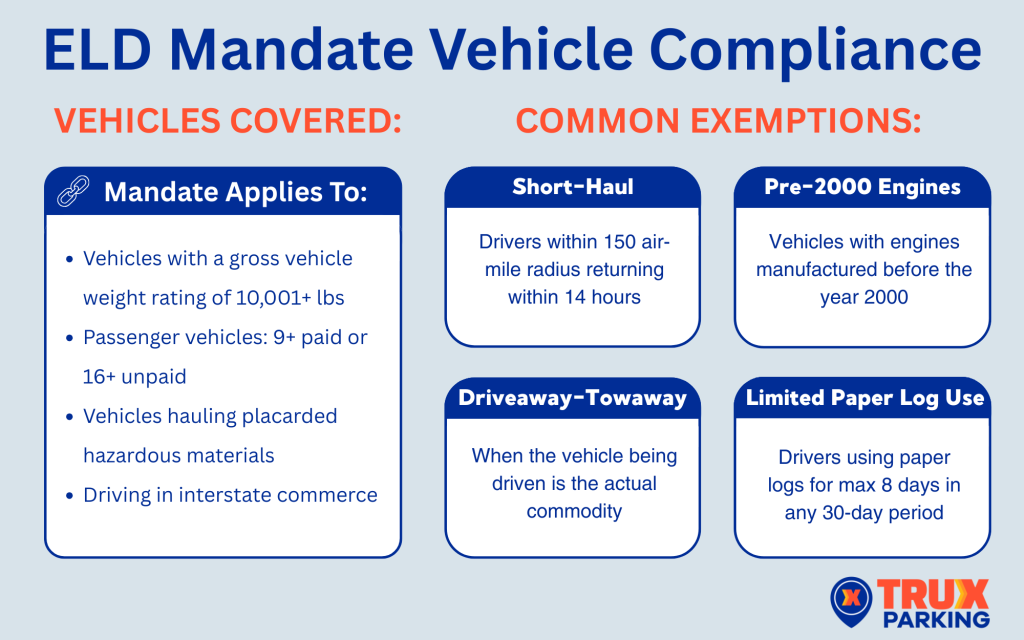
The mandate generally applies to:
- Commercial motor vehicles with a gross vehicle weight rating of 10,001 pounds or more
- Trucks designed to transport 9 or more passengers (including the driver) for compensation
- Trucks designed to transport 16 or more passengers (including the driver) without compensation
- Vehicles transporting hazardous materials in quantities requiring placards
Full vehicle specifications are listed on the FMCSA website.
Common Exemptions
Not every driver needs an electronic logging device. The FMCSA built several exemptions into the final rule:
- Short-haul exemption: Drivers operating within a 150 air-mile radius of their normal work reporting location and returning within 14 hours can stay on time records instead of an ELD if they meet the specific requirements
- Pre-2000 engines: Vehicles with an engine model year before 2000 are exempt because the vehicle’s engine often lacks the data ports an ELD device needs to connect to
- Driveaway-towaway operations: When the vehicle being driven is the commodity being delivered
- Limited paper log use: Drivers who use paper logs for no more than 8 days in any 30-day period
If you fit one of these categories, double-check the details on the FMCSA website before assuming you’re off the hook.
How an Electronic Logging Device Works
An ELD connects directly to the vehicle’s engine and pulls data automatically, replacing the manual entries that used to fill a paper log book. The device shares this information with the motor carrier as you drive, so dispatchers and safety managers can see duty status without waiting on paperwork. During a roadside inspection, drivers must be able to display or transfer the data to enforcement officers.
Here’s what a typical ELD tracks:
- Driving time and on-duty time
- Off-duty and sleeper berth time
- Engine hours and miles driven
- Vehicle location at set intervals
- Login and logout events for each driver
Some ELD solutions add an asset tracker, fuel monitoring, or maintenance alerts on top of the federal requirements. Those features support operational efficiency for the transportation company, but don’t change what’s required for ELD compliance.
Hours-of-Service Regulations and the ELD
The ELD mandate doesn’t change the HOS rules themselves; it changes how those rules are enforced and recorded. Hours-of-service regulations limit drivers’ hours behind the wheel to reduce fatigue and prevent crashes.
The current HOS rules for property-carrying commercial truck drivers include:
| Rule | Limit |
| Maximum driving time | 11 hours after 10 consecutive hours off duty |
| Driving window | 14 consecutive hours after coming on duty |
| Required break | 30-minute break after 8 cumulative hours of driving |
| Weekly limit | 60 hours in 7 days or 70 hours in 8 days |
| Restart provision | 34 consecutive hours off duty resets the weekly clock |
Source: FMCSA Hours of Service Regulations.
Because the ELD records data automatically from the vehicle’s engine, it’s much harder to fudge the numbers than with a paper log. That has reduced hours-of-service violations across the trucking industry and pushed motor carriers to plan routes and schedules more carefully.
Benefits of the ELD Mandate
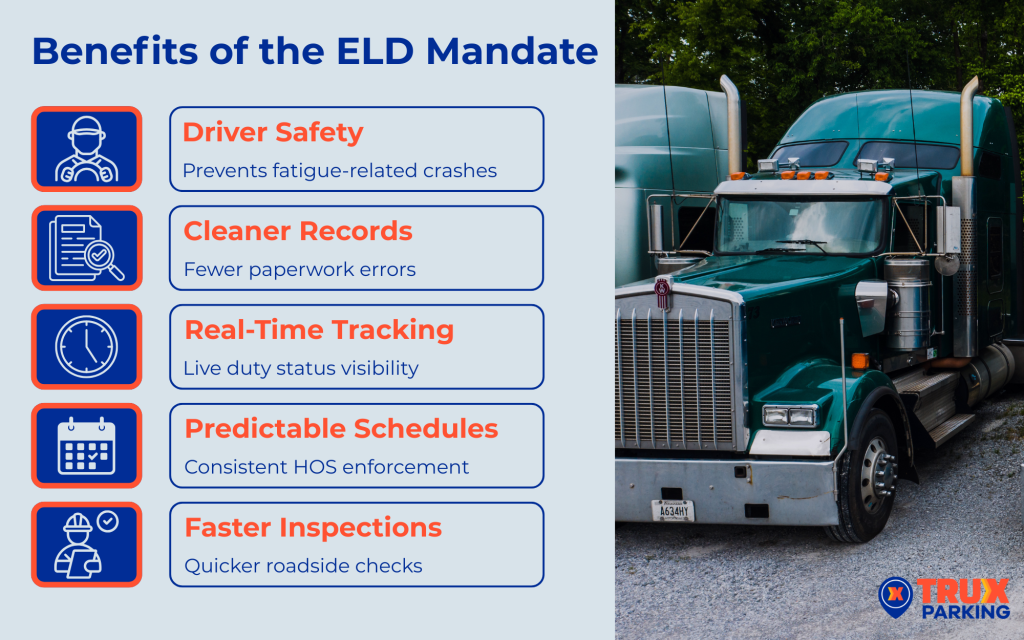
The mandate has produced real changes in the trucking industry. The benefits show up in a few key areas.
- Driver safety: Automatic tracking reduces the temptation to push past legal limits, which helps prevent fatigue-related crashes
- Cleaner records: Electronic logs cut down on paperwork errors and missing entries that used to slow down audits and inspections
- Operational efficiency: Fleet managers see duty status in real time, which helps with dispatching and load planning
- Safer work environment: Consistent enforcement of HOS rules creates more predictable schedules
- Faster inspections: Roadside checks go quicker when an officer can pull duty status data straight from the device
For a transportation company managing dozens or hundreds of drivers, the data also helps spot patterns. If certain routes keep pushing drivers past their HOS limits or flagging compliance issues, dispatchers can adjust before getting a citation.
Choosing a Compliant ELD
Not every device on the market is a compliant ELD. The FMCSA keeps a registry of self-certified devices on its website. Before buying, confirm that your ELD provider is listed on the official FMCSA registered ELD list.
When comparing options, look at:
- Self-certification and registration on the FMCSA list
- Compatibility with your vehicle’s engine and model year
- Driver display and ease of use
- Data transfer methods accepted during inspections
- Integrated features like GPS, asset tracker functions, or fuel tracking
- Support and training from the ELD provider
- Total cost, including hardware, subscription, and installation
If your ELD solution gets removed from the FMCSA registry, you have a short window to switch before you’re out of compliance. Stick with established providers that have a track record of keeping pace with federal regulation updates.
The Canadian Mandate for Cross-Border Drivers
Truck drivers who run cross-border routes need to know about the Canadian mandate too. Canada rolled out its own electronic logging device requirement, which took effect in stages. The Canadian rule has some differences from the U.S. version, including third-party certification requirements rather than self-certification. If you operate in both countries, your ELD solution should be certified for use in each jurisdiction.
Common ELD Mistakes to Avoid
Compliance mistakes happen even in well-run fleets. The following issues come up most often during audits and roadside inspections:
- Forgetting to log in at the start of a shift, leaving driving time unassigned
- Mishandling personal conveyance time and crossing the line into on-duty driving
- Failing to keep a backup paper log book in case the device fails
- Not training new drivers on how the device records duty status
- Ignoring malfunction alerts from the device
A small mistake on an electronic log can still trigger violations and fines. Build a routine for checking the device before each trip and treat it the same way you treat your pre-trip vehicle inspection.

Park Smart with TRUX Parking
Following hours-of-service regulations means you need a safe place to stop when your clock runs out. TRUX Parking gives professional drivers across the United States a reliable place to shut down for the night or store their truck between runs.
Every TRUX location includes electronic gated access from your phone, 24/7 surveillance cameras, industrial lighting, perimeter fencing, wide drive lanes built for commercial trucks, and flexible daily or monthly plans with no contracts or hidden fees. Reserve online, get instant access instructions, and rest easy knowing your truck is secure.
Find a location near you and book your space today!