




At a Glance: Maintaining a healthy lifestyle while trucking is one of the biggest challenges that comes with long hours behind the wheel. A sedentary routine, limited food options at truck stops, and irregular sleep schedules can lead to weight gain, high blood pressure, diabetes, and sleep apnea. The good news is that small, consistent changes add up. Smart meal choices, short exercise routines, better sleep habits, and regular medical checkups help professional drivers protect their health on the road. This guide covers practical nutrition and exercise tips you can put to use starting today.
Why Truck Driver Health Deserves Attention
Truck driving is a demanding job, and the lifestyle can come with real health challenges over time. Long-haul truck drivers spend most of their working day sitting, often grabbing fast food at the closest exit. Compared to the general population, professional drivers face higher rates of certain chronic diseases and health issues tied to a sedentary lifestyle.
Common health risks for commercial drivers include:
- Sleep apnea and other sleep disorders
- High blood pressure and high cholesterol
- Type 2 diabetes
- Heart disease
- Lower back and joint pain
- Mental health concerns like stress, anxiety, and depression
These health conditions matter for more than personal well-being. They can affect your medical examiner’s certificate, which is required to keep your commercial driver’s license valid. Staying healthy keeps you on the road and working.
Nutrition Tips for Truck Drivers
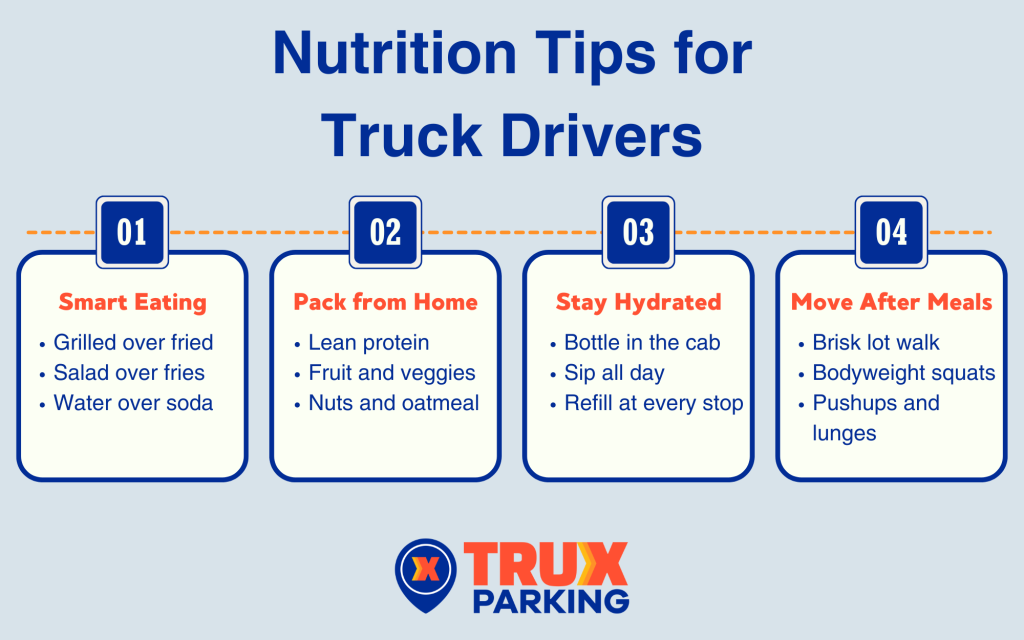
Food choices have a major impact on driver health. The good news is that eating well on the road is easier than it used to be, even when truck stops and quick service spots are your main options.
Smart Eating on the Road
Eating well on the road is easier than it used to be. Most stops along the highway offer grilled items, salads, fresh fruit, and protein choices that beat the standard burger and fries. A few simple swaps can make a real difference over the long haul.
Try these strategies at the counter:
- Choose grilled protein over fried
- Ask for a side salad or steamed vegetables instead of fries
- Skip sugary drinks and reach for water, unsweetened tea, or black coffee
- Watch portion sizes, especially on combo meals
- Look for whole-grain bread or wraps when available
Fast food is fine once in a while, but making it the foundation of your daily diet sets you up for weight gain, high cholesterol, and other health problems.
Packing Food from Home
The best way to control what you eat is to bring it yourself. A small fridge or cooler in your tractor-trailer makes this easy. Stocking up before a run takes a little planning, but it saves money and gives you better fuel for the long hours ahead.
Simple foods that travel well include:
- Pre-cooked chicken breast, hard-boiled eggs, or canned tuna
- Greek yogurt, cottage cheese, and string cheese
- Apples, oranges, bananas, and grapes
- Baby carrots, celery sticks, and bell peppers
- Whole grain crackers, nuts, and seeds
- Oatmeal packets that only need hot water
Hydration on Long Hauls
Water often gets overlooked, but proper hydration affects energy, focus, and even appetite. Coffee and energy drinks have their place, but they should not replace water during a long day of truck driving. Keep a reusable bottle within easy reach, so water is always close by.
Exercise Tips for Life on the Road
Staying active makes a real difference in how you feel after long hours of truck driving. You do not need a gym membership or hours of free time to make exercise work. Short, consistent movement adds up over weeks and months.
Quick Workouts at Truck Stops
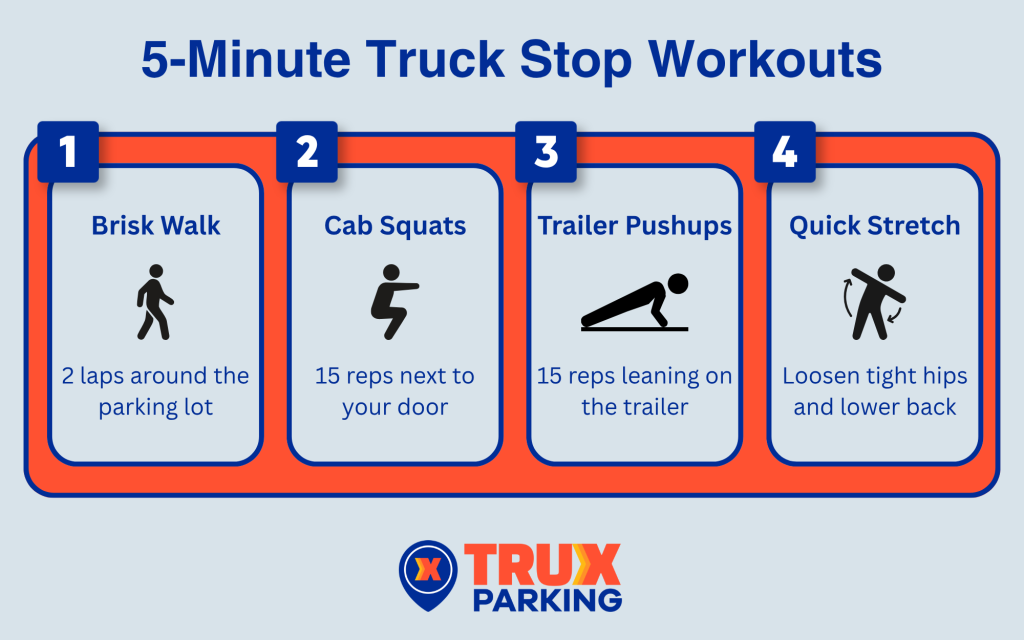
Most truck parking facilities have enough open space for a basic workout. Some larger stops even have walking paths or exercise facilities. Five to fifteen minutes of movement at each stop can make a real difference.
Easy options at a truck stop:
- A brisk walk around the parking lot
- Bodyweight squats next to your truck
- Pushups against the trailer or against a bench
- Lunges or step-ups using a curb
- Stretching to loosen tight hips and shoulders
Resistance Bands and Bodyweight Training
A resistance band set takes up almost no space and gives you a full body workout option from anywhere. A few bands, a pair of running shoes, and ten free minutes are enough to build a routine that supports diabetes prevention, healthy blood pressure, and stronger muscles.
A simple resistance band circuit might include:
- Rows: Anchor band at chest height, pull handles to your ribs, squeeze shoulder blades.
- Chest presses: Anchor band behind you, push handles forward from your shoulders.
- Bicep curls: Stand on the band, curl handles up to your shoulders.
- Tricep extensions: Hold band behind your head, straighten arms toward the ceiling.
- Squats: Stand on the band, hold handles at shoulders, sit back and stand up.
- Lateral leg raises: Loop band around ankles, lift one leg straight out to the side.
Repeat the circuit two or three times, and you have a solid workout in under twenty minutes.
Walking, Stretching, and Daily Movement
Walking is one of the best forms of physical activity for professional drivers. It is low impact, easy on the joints, and free. Try to log a short walk at every fuel stop or rest break. Stretching is just as important. Long periods in the driver’s seat shorten the hip flexors and tighten the lower back. A few minutes of stretching before and after each shift helps prevent pain and stiffness.
Sleep and Mental Health on the Road
Driver health goes beyond food and exercise. Sleep and mental health play just as big a role in how you feel and how safely you drive.
Sleep Apnea and Restful Nights
Sleep apnea is one of the most common health conditions affecting long-haul truck drivers. It raises the risk of fatigue, heart disease, and serious accidents. If you snore loudly, wake up gasping for air, or feel exhausted even after a full night of sleep, talk to a doctor about a sleep study.
A few habits that help with better sleep:
- Park in a quiet, secure location at night
- Use blackout curtains in the sleeper berth
- Limit caffeine in the late afternoon and evening
- Keep a regular sleep schedule when possible
- Wind down with a book or quiet music instead of a screen
Mental Health on the Road
Long hours alone in a commercial vehicle can take a toll on mental health. Stress, loneliness, and burnout are real risk factors in the trucking industry. Stay connected with family and friends through regular phone calls. Listen to audiobooks or podcasts that lift your mood. If stress or low mood lingers, reach out to a professional. Many health insurance plans now cover telehealth counseling, which fits well with a driver’s schedule.
Medical Certification and Wellness Resources
Every commercial driver in the United States needs a valid medical examiner’s certificate to keep working. Routine checkups give you a chance to catch issues early and stay ahead of chronic disease.
Things to keep on your radar:
- Annual physical exams with a primary care doctor
- DOT physicals on schedule
- Regular dental and vision checkups
- Blood pressure and cholesterol screenings
- Mental health checkups when needed
Many carriers in truck transportation now offer a wellness program with discounts on gym memberships, telehealth visits, or weight loss support. If your employer offers one, take advantage of it.
Building Healthy Habits That Stick
A healthy lifestyle on the road is built one choice at a time. Trying to change everything at once almost always backfires. Pick one habit to focus on for a few weeks, then add another. Track your progress in a notebook or app so you can see what is working.
A few habit ideas to start with:
- Drink a full bottle of water with every fuel stop
- Take a five minute walk every time you take a meal break
- Pack one healthy snack for every fast food meal
- Stretch for two minutes before climbing into the cab each morning
Small wins add up. Over a year, those small choices can mean better health outcomes, more energy, and a longer career behind the wheel.

Take Care of Yourself and Your Truck with TRUX Parking
Staying healthy on the road starts with safe, secure places to rest, eat, and recharge. TRUX Parking gives professional drivers across the United States a reliable home away from home. Every TRUX facility features electronic gated access with 24/7 surveillance, industrial lighting, perimeter fencing, and wide lanes built for tractor-trailer trucks. Flexible daily or monthly parking with no contracts or hidden fees gives you the freedom to book the way that works for your schedule, and select locations also offer Wi-Fi, trash service, and on-site diesel mechanics.
When you park with TRUX, you get a quiet, secure spot to sleep, stretch, prep a healthy meal, and get ready for the next leg of your trip. Reserve your space online today and make TRUX Parking part of your healthy routine on the road.
Find a location near you and book your space today!