


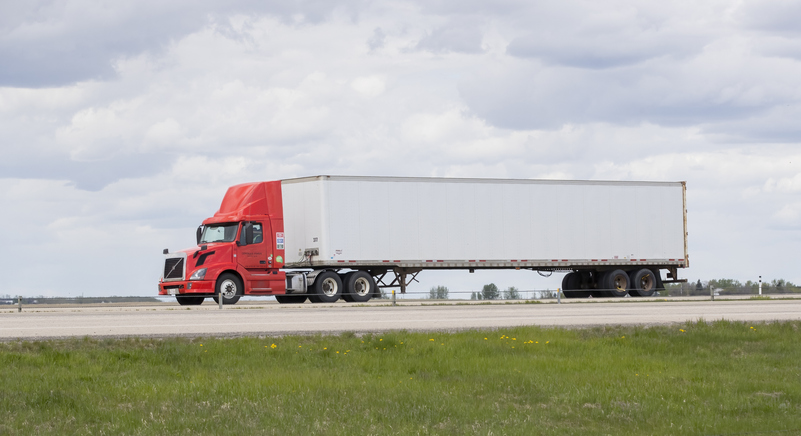
At a Glance: OTR trucking, short for over the road, is long-haul driving that moves freight across the country, often across many state lines on a single trip. Over the road drivers can be away from home for weeks at a time, running the longest routes in the trucking industry for the highest pay. The work means long hours, strict federal hours-of-service limits, and a lot of nights parked away from home.
Long routes and extended time away from home make OTR trucking a different experience from regional or local work. For drivers considering the job, understanding the daily routine matters just as much as comparing pay and home time. This guide covers what OTR trucking is, how it works day to day, how it compares to regional and local driving, and what it takes to become an OTR driver.
What OTR Trucking Is
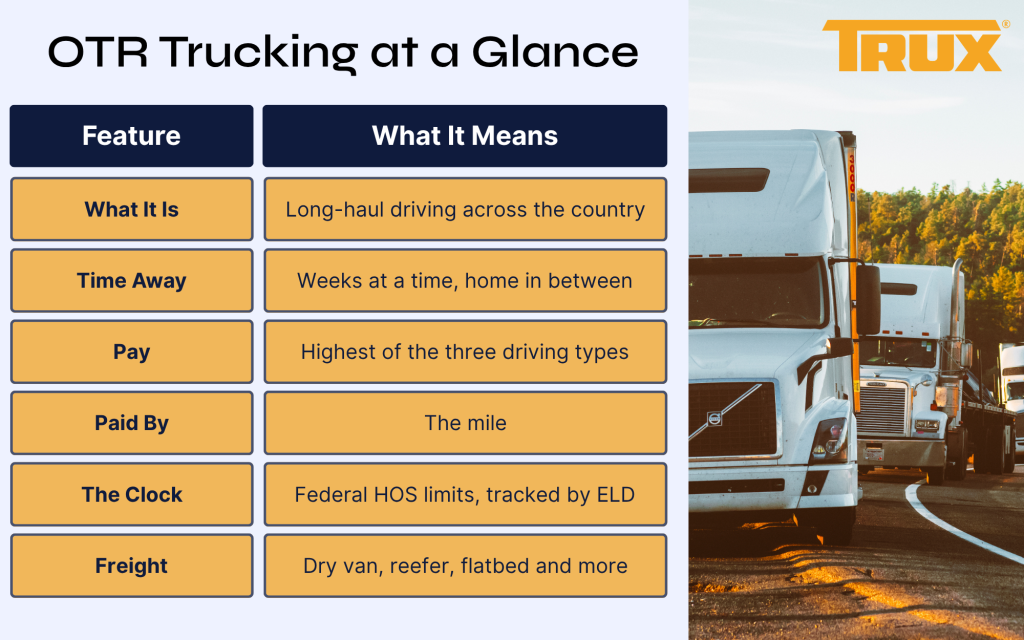
OTR stands for over the road. It is the long-haul side of the trucking industry, where professional drivers haul freight long distances across the United States, often coast to coast. A single load can run a long way, often across several state lines, before it is delivered.
Over the road drivers keep the supply chain moving. The food in grocery stores, the parts on factory floors and the packages on doorsteps all spend time on an OTR truck at some point. Because the routes are so long, an over the road driver may be on the road for a week or more at a time, sleeping in the truck and living out of the cab between stops.
Some over the road drivers work for a trucking company. Others are an owner operator who owns the truck and runs under their own authority or leases it with a carrier. Either way, the job is built around covering long distances on tight delivery deadlines.
How OTR Trucking Works
A typical over the road run starts with a dispatch. The driver gets a load, a pickup location, and a delivery window, then plans the trip around the miles and the clock. Most OTR drivers are paid by the mile, so the route, the traffic, and the road conditions all affect the paycheck. Good trip planning is part of the skill. The driver plans fuel stops and rest breaks around the delivery window, leaving room for weather and traffic that can throw off a day.
Once loaded, the driver heads out on long-haul routes that can span the continental United States. A solo driver can spend the better part of a week crossing the country, while a two-person team splits the driving and gets there faster. Along the way the driver fuels up, finds parking for required rest, and keeps an eye on delivery deadlines.
How OTR Drivers Get Paid
Over the road pay is built around the mile, which rewards the drivers who keep the wheels turning and plan efficient routes. Pay also depends on the carrier, the type of freight, and how many loads a driver is assigned in a given week. Some loads add detention pay when a driver is stuck waiting at a dock, and many companies offer per diem to help cover meals and expenses on the road.
For an owner operator the math is different. They often earn a higher rate, but cover their own operational costs, including fuel, maintenance, insurance, and the truck payment. Average salary figures vary widely by experience, region, and how a driver is paid, so it helps to compare the whole package rather than a single number.
Hours of Service and the ELD
Over the road driving runs on a federal clock. The Federal Motor Carrier Safety Administration sets hours-of-service limits that cap how long a driver can be behind the wheel. A property-carrying driver can drive up to 11 hours after 10 hours off duty, within a 14-hour daily window, and is limited to 60 hours in 7 days or 70 hours in 8 days.
Those hours are tracked automatically by an electronic logging device, or ELD, which connects to the truck’s engine and records drive time. For an over the road driver, the ELD shapes the whole trip. When the hours run out, the truck has to stop, which makes finding a safe place to park one of the real daily problems of the job.
OTR vs Regional vs Local Driving
Over the road is one of three main ways to drive for a living. The difference comes down to how far you go and how often you get home.
| Type | Area covered | Home time | Pay |
| OTR (over the road) | Long distance, often coast to coast | Away from home for weeks at a time | Highest of the three |
| Regional | A set region or a few nearby states | Home most weekends | Middle |
| Local | A single metro area or dedicated route | Home every night | Lowest of the three |
A regional driver runs a regional route inside a set area and usually gets home more often than an over the road driver. Local trucking keeps a driver close to home on a dedicated route, back in their own bed each night. OTR trades that home time for more miles, more pay, and a lot more time seeing new places.
Types of Freight OTR Drivers Haul
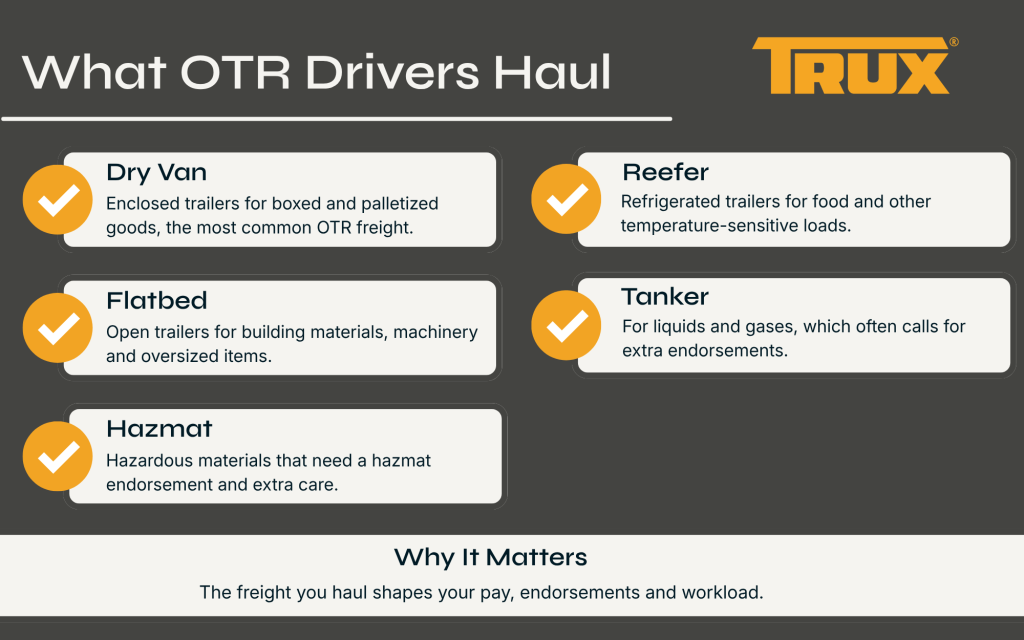
Over the road drivers move almost everything, and the kind of trailer shapes the job:
- Dry van: enclosed trailers that carry boxed and palletized goods, which make up a large share of OTR freight
- Reefer: refrigerated trailers that haul food and other temperature-sensitive loads
- Flatbed: open trailers for building materials, machinery, and oversized items that need strapping and tarping
- Tanker: for liquids and gases, which often calls for extra endorsements
- Hazardous materials: require a hazmat endorsement and extra care on the road
The freight a driver hauls affects the pay, the endorsements they need, and how hands-on the loading and unloading gets.
What You Need to Become an OTR Driver
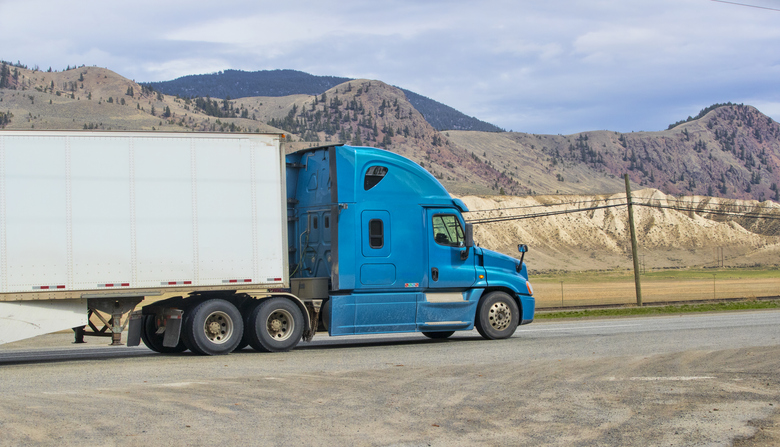
Getting into over the road driving takes a few things beyond a willingness to live on the road.
- A commercial driver’s license, usually a Class A, which covers tractor-trailers and other heavy combinations
- Previous truck driving experience, since many carriers want regional or local driving under your belt first, though training programs can help a new driver get started
- A current DOT medical card, which means passing a physical
- Endorsements for certain freight, such as a hazmat endorsement to haul hazardous materials
- The stamina for long hours, disrupted sleep, and days away from home
To become an over the road driver, start by earning your commercial driver’s license, passing a DOT physical, and getting any endorsements needed for the freight you want to haul. From there, look for a trucking company with hiring requirements or a training program that matches your experience. Preparing for long hours and weeks away from home is another important part of getting ready for OTR work.
Why Drivers Choose OTR
Over the road driving appeals to professional drivers who want miles, independence, and the chance to see the country. A few of the things that draw people to it:
- Higher pay than local or regional work
- The open road and seeing new places across the country
- More independence in how the day runs
- Steady demand, since freight has to move no matter the economy
- A real sense of accomplishment in keeping the supply chain moving across the United States
For drivers who enjoy being on the move, over the road work offers the longest routes and the widest view of the country of any job in the trucking industry.
Rest Easier With TRUX Parking
Long-haul routes take drivers far from home, making a dependable place to park an important part of planning each trip. After a full day behind the wheel, knowing where you’ll stop means one less thing to worry about.
TRUX Parking gives over the road drivers a safe, reliable place to stop and rest between hauls. With parking in various locations across the country, drivers can plan stops along their cross-country routes. Gated access, 24/7 camera surveillance, industrial lighting, and wide lanes make parking simple after hundreds of miles.
Flexible daily and monthly options mean no contracts and no hidden fees, and online booking gives you instant access instructions so you can get parked faster. Reserve your spot with TRUX Parking today and give yourself a dependable place to rest before the next long haul.