


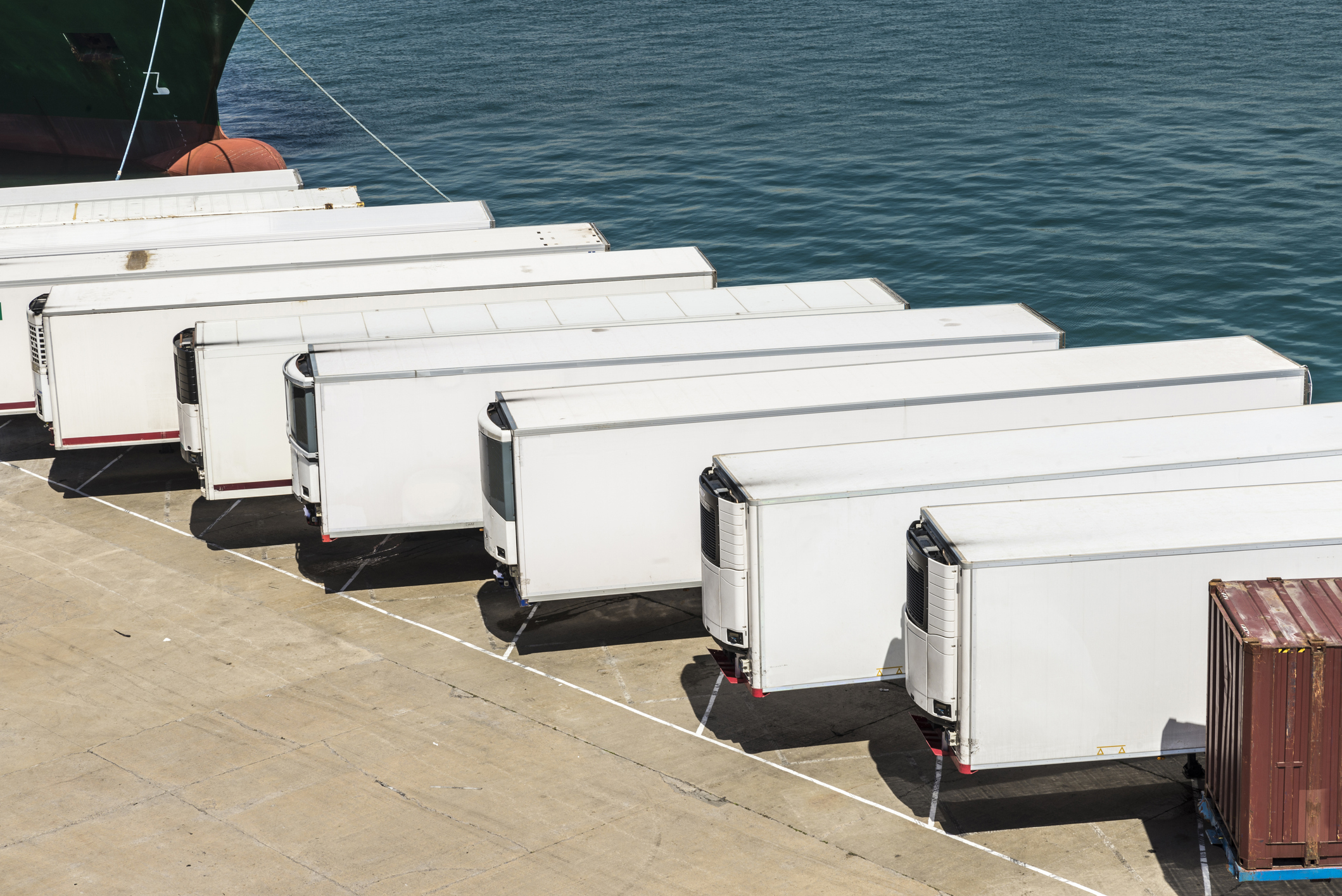
At a Glance: A reefer is a refrigerated trailer built to haul perishable goods that have to stay cold or frozen, like produce, meat, dairy, and pharmaceuticals. It has an insulated cargo area and a refrigeration unit up front that holds a specific temperature the whole trip. A dry van is a plain enclosed trailer with no temperature control, used for freight that will not spoil. Put simply, reefers hold freight at a set temperature and dry vans just keep it dry. Reefer work pays more but comes with more rules and upkeep.
Walk through any truck stop and you will see both trailers lined up side by side. From the outside they can look almost the same, but the freight inside, the pay, and the daily routine tell a different story. A refrigerated load asks more of you than a box of dry goods, and knowing what each trailer involves before you take the work helps you pick the runs that fit how you want to drive. This guide breaks down how a reefer and a dry van each work, what they haul, and what the job looks like behind the wheel of each.
What Is a Reefer Truck or Trailer?
The term “reefer” is short for “refrigerated.” In trucking, a reefer is a trailer designed to carry temperature-sensitive goods by maintaining a specific temperature throughout the trip.
A few related terms are commonly used in reefer trucking, but they refer to slightly different parts of the equipment:
- Reefer trailer / refrigerated trailer: An insulated trailer pulled by a truck that uses temperature control to protect perishable goods and other temperature-sensitive cargo.
- Reefer unit / refrigeration unit: The cooling system mounted on the front of the trailer that controls the cargo area temperature. It can cool or heat the trailer to maintain the required setting.
- Reefer truck / refrigerated truck: A general term for a truck used to transport refrigerated freight. This can refer to a straight box truck with refrigeration or a tractor pulling a reefer trailer.
- Reefer container: A refrigerated shipping container used for transporting temperature-controlled freight by rail or ocean rather than standard highway hauling.
For a truck driver, reefer usually means hauling loads that need consistent temperature control, such as fresh produce, dairy products, medical supplies, and other perishable freight. These trailers help move goods through cold chain logistics, from farms and manufacturers to distribution centers and grocery stores.
How a Reefer Keeps Freight Cold
A reefer is more than a cold box. It cools freight with two parts working together: insulation and a refrigeration unit. The trailer walls, floor, and doors are insulated to hold temperature and block outside heat. Mounted on the front is the reefer unit, a self-contained refrigeration system with its own small diesel engine or electric standby power. It pushes cold air through the cargo area to hold the load at the degree the driver sets. That target is called the setpoint, and the refrigeration system works to keep the box there for the whole run, even over long distances.
Continuous vs. Cycle Mode
Reefer units run in one of two ways. In continuous mode, the unit runs nonstop to hold a steady temperature, which many fresh and temperature-sensitive loads need. In cycle or start-stop mode, the unit runs only when the internal temperature drifts off the setpoint, which saves fuel on loads that can handle small swings. The load instructions tell you which mode to use, so always follow the shipper’s setpoint and mode.
Heating, Not Just Cooling
A reefer does not only cool. In winter, the same unit can add heat to keep produce from freezing. A reefer’s job is not to make freight cold; it is to hold the specific temperature the load needs, warm or cold, from pickup to delivery. A modern refrigeration unit uses a gaseous refrigerant to move heat in or out, so the box stays at a steady temperature no matter the weather outside.
What Is a Dry Van?
A dry van is the trailer most people picture: a plain enclosed box on wheels with rear doors and no temperature control. Its whole job is to keep dry goods dry and secure. These vans haul the large share of freight that holds up at any temperature, from boxed retail goods to packaged food, paper, and household products. They are lighter, simpler, and cheaper to run than a reefer, which is why they are the most common trailer on the road. For many truck drivers, dry van freight is where they start, since the loads are simpler and the trailer needs almost no attention on the road. The one thing it cannot do is protect a load from heat or cold, so perishables stay out.
Reefer vs. Dry Van: The Key Differences
Both trailers move freight over long distances, but they are built for different jobs. Here is how they stack up side by side.
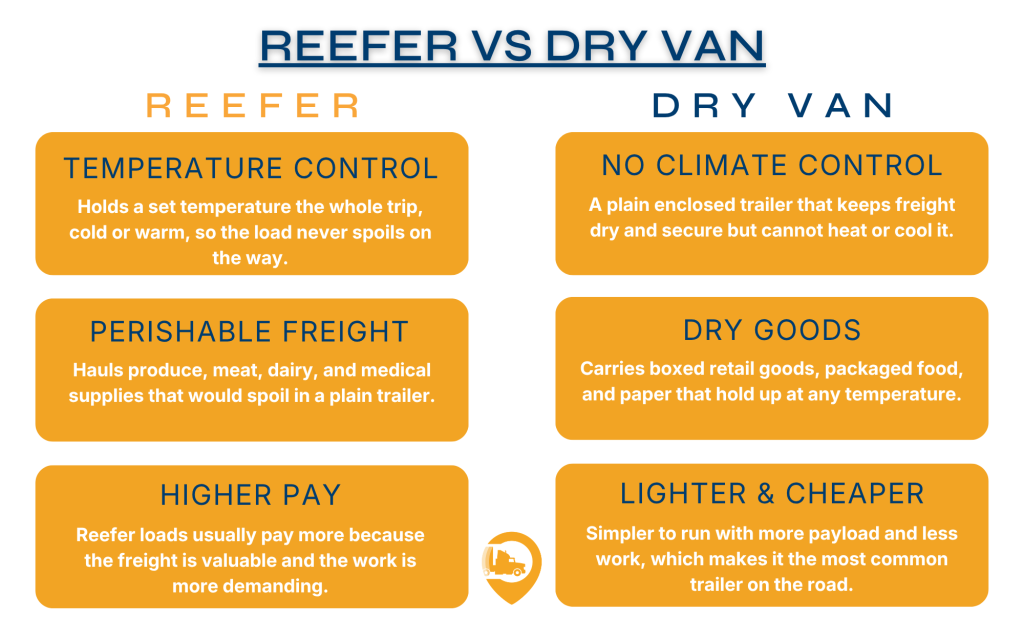
The short takeaway is that a reefer does everything a dry van does and adds temperature control on top. That extra capability is why reefer trucking costs more to run and asks more of the reefer driver.
What Reefers Haul
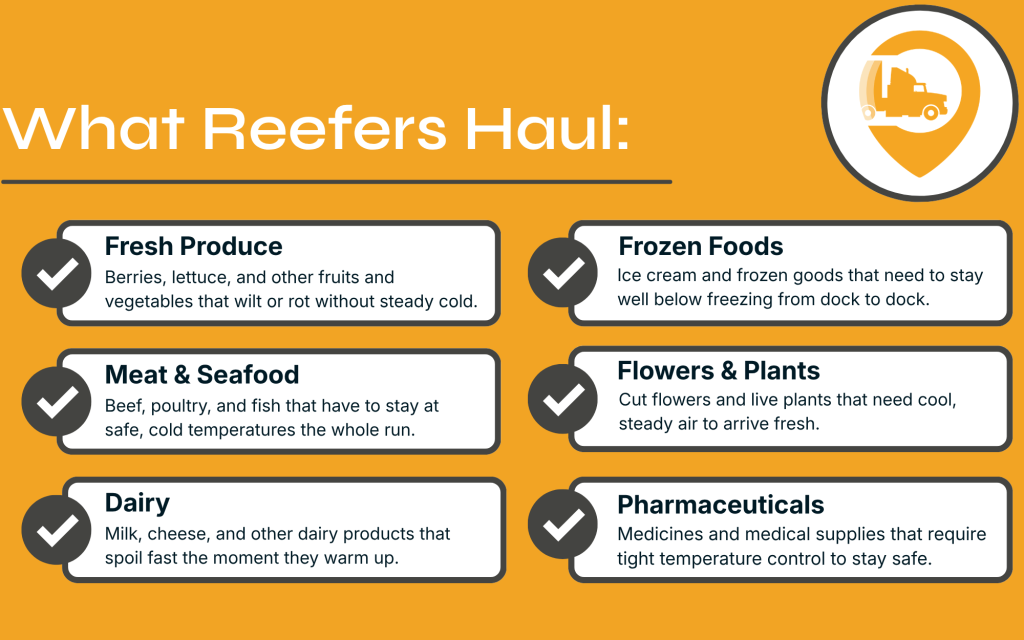
Reefers move the perishable goods that would spoil in a plain trailer. Common reefer loads include:
- Fresh produce like berries, lettuce, and other fruits and vegetables
- Meat, poultry, and seafood
- Dairy products, from milk to cheese
- Frozen foods and ice cream
- Flowers and live plants
- Pharmaceuticals and medical supplies
Because so much of this is food, reefer freight comes with food safety rules. Under the FDA’s Sanitary Transportation of Human and Animal Food rule, reefer carriers have to keep food at safe temperatures and keep their equipment clean between loads. For a reefer driver, that means the setpoint and the washout are not just habits, they are part of staying compliant while hauling temperature-sensitive cargo.
What It Is Like to Drive a Reefer
Pulling a reefer has a different rhythm than pulling a plain trailer. Temperature-controlled freight requires a few extra steps compared to dry van loads:
- Pre-cool the trailer to the setpoint before the freight is loaded
- Set the right temperature and mode, then double-check both against the paperwork
- Keep the reefer unit fueled, since it burns diesel separate from the tractor
- Watch the internal temperature and keep clean download records for proof of delivery
- Wash out the trailer between loads to stay sanitary
- Plan around tight appointment windows, since perishable freight will not wait
The added checks and equipment requirements are why reefer freight often comes with higher pay than dry van loads. Drivers take on more responsibility to keep temperature-sensitive cargo protected from pickup to delivery. A reefer truck driver who runs clean, on-time loads becomes the kind of reefer driver shippers ask for by name. If you want to understand how loads reach you in the first place, our guide on freight brokers and dispatchers breaks down who finds and books that freight.
Parking a Loaded Reefer
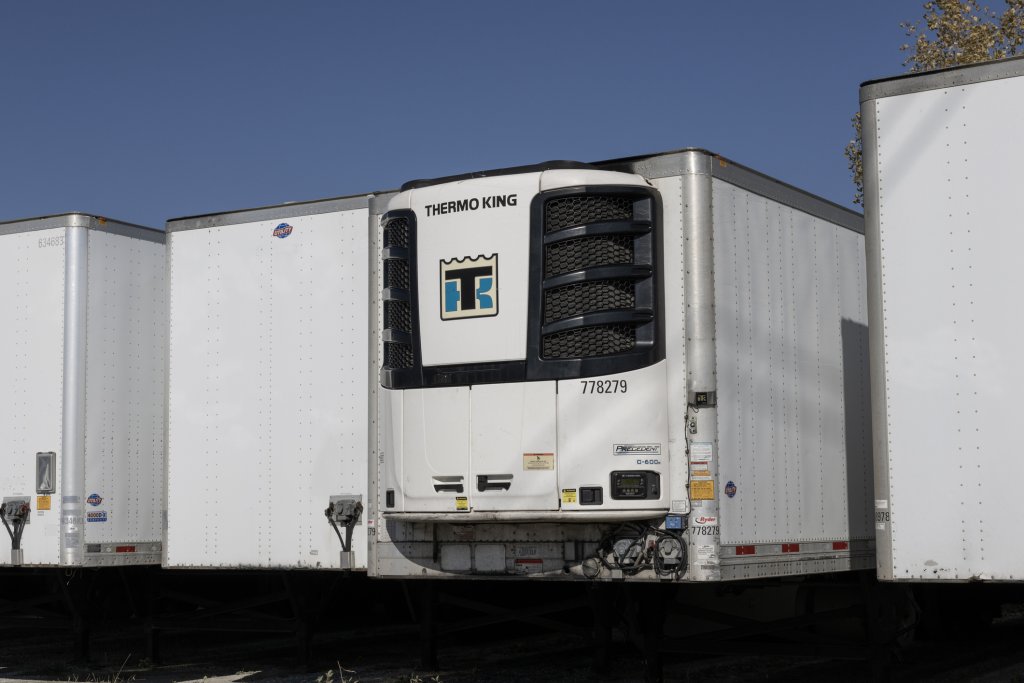
Parking a loaded reefer comes with an extra challenge: the refrigeration unit often needs to keep running while the driver rests to maintain the correct temperature. That means using additional fuel and dealing with noise restrictions at some public truck stops. Some locations limit reefer idling, making it harder to find a place where the unit can safely run overnight. Leaving a loaded reefer in an unsecured lot also creates added risk because the freight requires protection and consistent temperature control. Choosing a secure parking location helps protect both the truck and the cargo.
This matters even more on a long break. If you are parked for a 34-hour restart or an overnight layover, you want a secure spot where you can keep the unit running and the load protected instead of circling for a place to sit. A gated TRUX Parking lot gives you exactly that.
Park Secure with TRUX Parking
Reefer or dry van, where you park matters. TRUX Parking gives professional drivers gated lots across the United States with 24/7 cameras, industrial lighting, and perimeter fencing, plus wide stabilized lanes with room for a full rig. Booking is completed online with instant access instructions after you reserve your spot. TRUX offers straightforward daily and monthly pricing with no contracts or hidden fees. Some lots also add Wi-Fi, trash service, and on-site diesel mechanics. For a reefer driver hauling temperature-sensitive goods across the United States, that means a secure place to keep your unit running and your load safe between stops.
Find secure TRUX Parking in:
- Georgia
- Tennessee
- Alabama
- Texas
- Missouri
- Idaho
- Mississippi
- Arkansas
- Oklahoma
- Ohio
- California
- Iowa
- Pennsylvania
- North Carolina
- Florida
- Oregon
- Nevada
- South Carolina
- Arizona
- Washington
You handle the freight. Let TRUX handle the parking. Reserve your spot online today and keep your load protected wherever the route takes you. Your home away from home is ready when you are.