



At a Glance: Truckers knee is knee pain that builds up from long hours of pressing pedals and sitting with a bent knee. It can involve patellar tendonitis, also called jumper’s knee, an irritation of the tendon just below the kneecap. The pain may start as an ache after a long drive and can turn sharp over time. Treatment may include rest, stretching, a better cab setup, and strengthening.
For professional drivers, knee pain can make pressing pedals, climbing in and out of the cab, and getting through a long shift uncomfortable. Understanding the symptoms and addressing them early can help drivers take the next step toward relief. This guide covers the causes, the symptoms, how to treat it, and when to see a doctor.
What Truckers Knee Actually Is
Trucker’s knee is not a formal medical term. It is the name professional drivers use for the knee pain that comes with the job. You may also hear it called jumper’s knee or gas pedal knee. Most of the time it points to patellar tendonitis, an irritation of the tendon that connects your kneecap to your shinbone. That tendon works every time you straighten your leg, so braking and accelerating all day keeps it under load.
It is a repetitive use injury, which means it builds up from the same motion over and over rather than one sudden event. It sits in the same family of repetitive strain injuries as carpal tunnel syndrome and tennis elbow.
Left alone, it gets worse. Small tears build up faster than your body can repair them, and pain that once came only after a long haul starts showing up earlier and lasting longer, often with stiffness in the knee joint and limited mobility. Working through the pain can cause more and larger tears, so it pays to deal with it early.
Truckers Knee vs Runner’s Knee
People often mix up two knee problems, and the treatment is not always the same for both. Patellar tendonitis is pain in the tendon below the kneecap. Patellofemoral pain syndrome, sometimes called runner’s knee, is pain around or behind the kneecap. Their symptoms can overlap, and some people have both conditions. A doctor or another qualified healthcare professional can examine your knee to determine what is causing the pain and recommend the right treatment. The table below highlights typical differences, but it should not be used to diagnose yourself.
| Feature | Patellar tendonitis (trucker’s knee) | Patellofemoral pain syndrome (runner’s knee) |
| Where it hurts | Just below the kneecap, over the tendon | Around or behind the kneecap |
| What it feels like | Aching or sharp pain that worsens with activity | Dull ache, often with grinding or clicking |
| Activities that may aggravate pain | Activities that load the tendon; prolonged sitting may also hurt | Stairs, squatting, and prolonged sitting with the knee bent |
| Worse when | Straightening the leg under load | Sitting still a long time, then standing up |
| First-line fix | Rest, ice, tendon strengthening | Rest, posture and seat changes, quad strengthening |
What Causes Truckers Knee
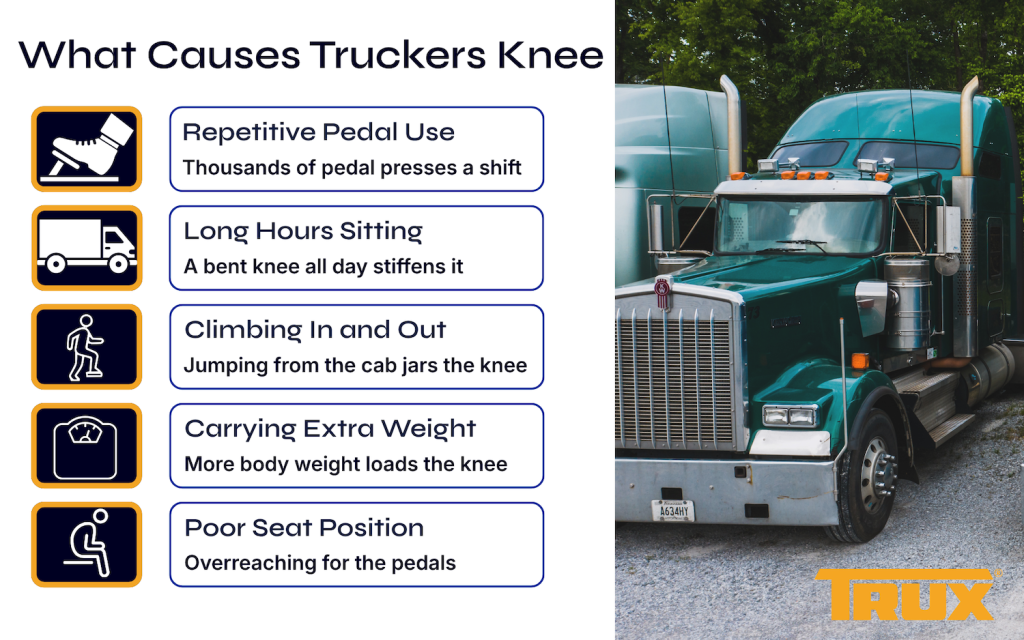
A few parts of the job cause truckers’ knees, and long-distance drivers see it most.
Repetitive Pedal Use
Every press of the gas or brake pedal asks your knee and the tendon below it to work, and over a long shift that adds up to thousands of small movements. The right knee takes the most strain, so right knee pain is common among professional drivers.
Long Hours Sitting With a Bent Knee
Sitting for hours with your knee at the same angle can aggravate knee discomfort, and the first few steps at a rest stop can feel rough. Pain during prolonged sitting with a bent knee is particularly associated with patellofemoral pain syndrome, also called runner’s knee, though it can also occur with patellar tendonitis. These are different conditions that may fall under the informal term “truckers knee.”
Climbing In and Out and Jumping Down
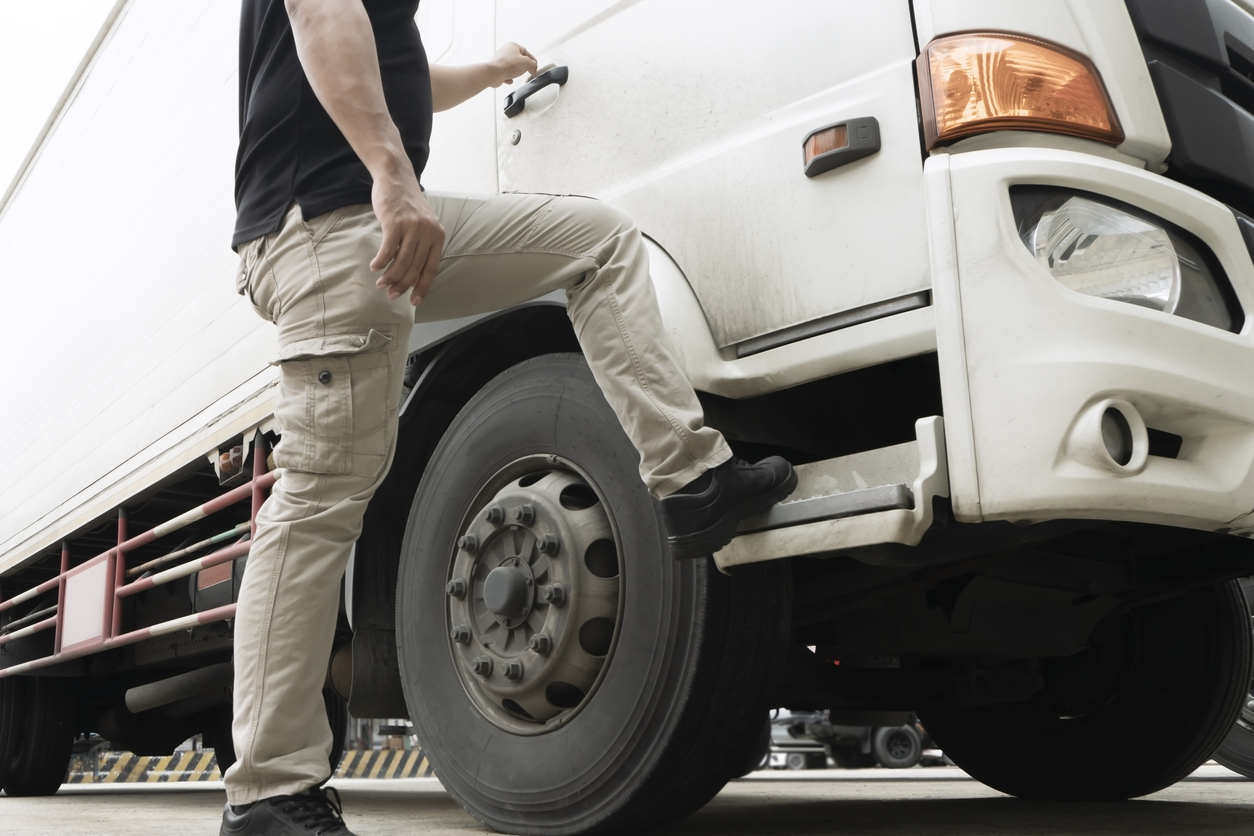
Getting in and out of a tall cab and jumping off a trailer puts a hard load on the knee. Flatbed drivers who climb onto the deck all day see this most.
Other Things That Add Up
A few other factors make trucker’s knee more likely or painful.
- Carrying extra body weight, which adds load to the knee with every step
- Worn out or unsupportive footwear
- A seat set too far from the pedals, forcing the leg to overreach
- An old knee injury that never fully healed
- Skipping any warm up before a long day
Symptoms to Watch For
Truckers knee usually starts small and grows. Common signs include:
- Pain or tenderness just below or around the kneecap
- A grinding, clicking or popping feeling when you bend the knee joint
- Stiffness, especially after sitting still for a long time
- Swelling around the knee
- Weakness or trouble putting full weight on the leg
- Knee discomfort that gets sharper the longer you drive
Mild joint pain often eases with rest and simple changes. It becomes a problem when it keeps coming back or affects how you walk, stand, or work.
When to See a Doctor
See a medical professional if the pain is severe, does not improve after a week or two of rest and self-care, or comes with heavy swelling, instability or a knee that gives out. These can point to a more serious injury.
Knee pain that limits your movement can also come up during a DOT physical, where a medical examiner checks that you can safely operate the vehicle. Handling it early protects your health and your ability to keep working.
This information is general and is not medical advice. If you have a medical condition or ongoing knee pain, talk to a healthcare provider about a treatment plan that fits you.
How to Treat Truckers Knee
Most cases get better with conservative care, and surgery is rare. The idea is to reduce the strain, calm the inflammation, and rebuild strength.
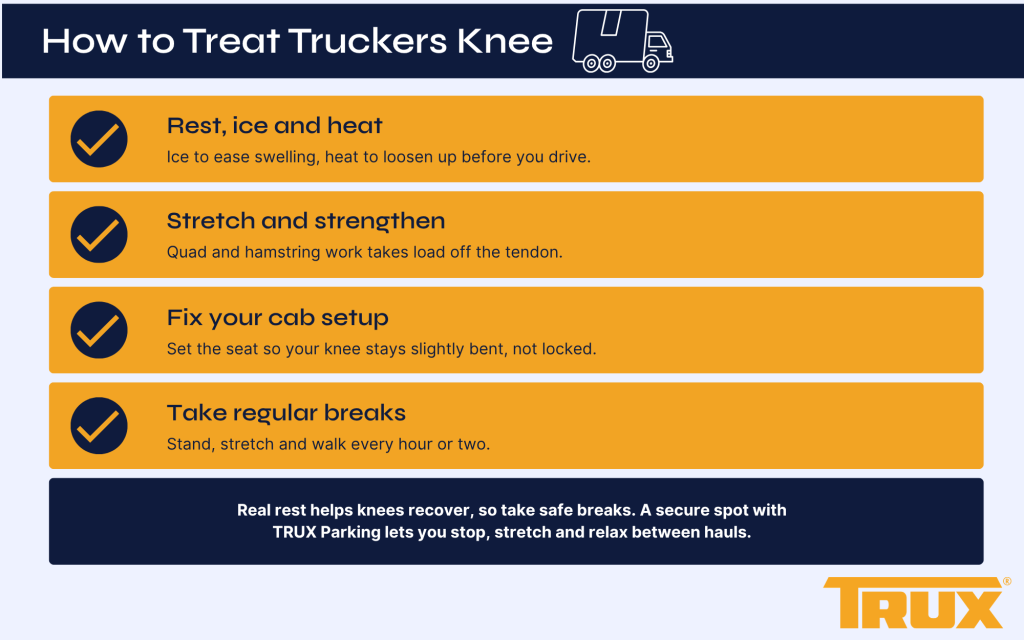
Rest and Recovery
Rest is the first step. Back off the activities that aggravate the knee and give the tendon time to recover. Elevating the leg at a stop helps bring down swelling.
Ice and Heat
Ice the knee for 15 to 20 minutes to bring down swelling and pain, especially after a long drive. Use heat before activity to loosen tight muscles and get blood moving.
Stretches and Light Exercise
Gentle movement and light exercise help more than complete stillness once the worst pain settles. A few simple options:
- Quad stretch, standing or kneeling, about 30 seconds per leg
- Hamstring stretch to loosen the back of the thigh
- Straight leg raises while lying down to build the muscles around the knee
- Bodyweight squats and calf raises during stops, done slowly
- Short walks around the truck every couple of hours to keep blood flowing
Strong thigh muscles take pressure off the tendon, so building the quads is one of the better long term fixes, and you or a physical therapist can set up a routine. Some drivers also wear a knee brace or compression sleeve for light support on long drives, which can ease knee discomfort while the tendon heals.
Fix Your Cab Setup
Small changes to how you sit can take a lot of strain off the knee.
- Adjust your seat so your knee stays slightly bent on the pedals, not locked straight
- Set the seat height and distance so you are not overreaching for the pedals
- Use a lumbar support cushion to keep your spine and legs aligned
- Keep the seat close enough that your foot rests naturally on the pedal
If conservative care does not help after a few weeks, a doctor may recommend physical therapy, medication or further evaluation.
How to Lower Your Risk on the Road

Prevention comes down to a few habits you can keep up during a normal workday.
- Take short breaks every hour or two to stand, stretch, and walk
- Wear supportive shoes with good arch support
- Keep your weight in a healthy range to reduce load on the knees
- Warm up the legs before a long day and move around after
- Handle aches early instead of pushing through them
Protecting your knee health also protects the rest of your body, since the same long hours that strain the knees affect the lower back and shoulders too.
Why Real Rest Matters for Your Knees
A lot of knee recovery depends on quality rest, which is hard to control on the road. When you can park somewhere safe and actually relax, your body gets the chance to recover instead of staying tense through the night. Research suggests as many as 62% of truck drivers experience some kind of musculoskeletal pain, including lower back and shoulder pain, so protecting your downtime is part of protecting your career.
Rest Easier With TRUX Parking
TRUX Parking gives professional drivers a safe, reliable place to stop, rest, and recover at the end of a long shift. With secure lots across the country, you get gated access, 24/7 camera surveillance, industrial lighting, and wide lanes that make parking simple after a hard day. Flexible daily and monthly options mean no contracts and no hidden fees, and online booking gives you instant access instructions.
Reserve your spot with TRUX Parking today and give yourself a safe place to rest, recover, and get ready for the next haul.