


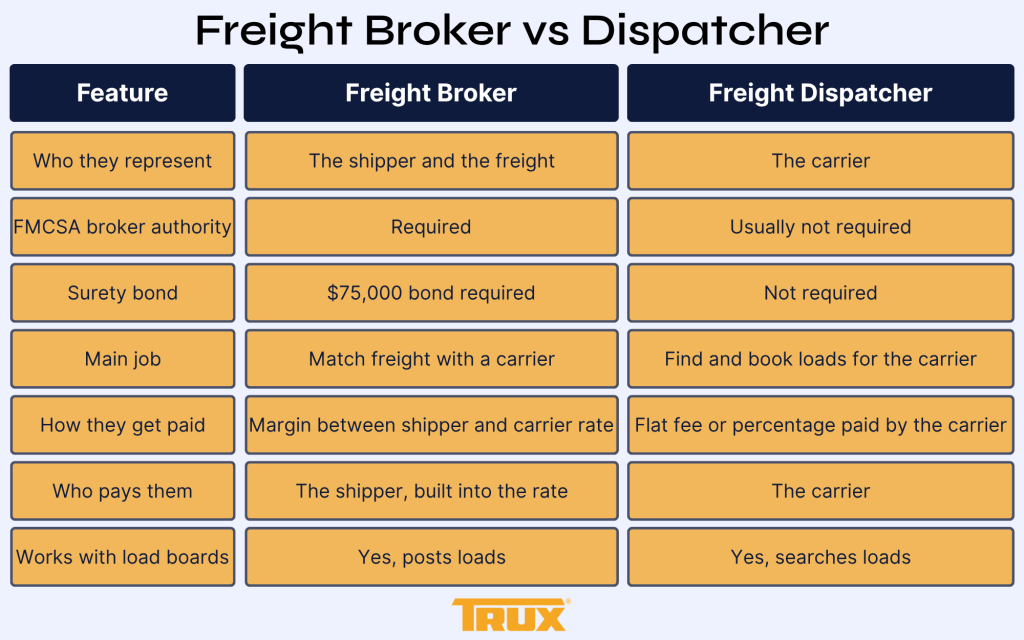
At a Glance: A freight broker is an FMCSA-licensed middleman who connects a shipper’s freight with a motor carrier. The broker earns the difference between what the shipper pays and what the carrier accepts. A freight dispatcher works on behalf of the carrier, finding loads, booking them, and handling paperwork for a flat fee or a percentage. The biggest difference is who they represent. A broker represents the freight and the shipper. A dispatcher represents the truck driver. Brokers need broker authority and a surety bond. Most dispatchers do not.
Freight brokers and freight dispatchers both play a part in keeping your truck loaded, but they are not the same thing. This guide breaks down what each one does, how they get paid, and how to tell which role belongs on your side of the table.
Why the Difference Matters to Professional Drivers
“Broker” and “dispatcher” are used like the same word, but they sit on opposite sides of your business. A broker works for the shipper. A dispatcher works for you. Knowing which is which tells you who is on your side and where your money is going.
Understanding the difference helps you:
- Know who is working for you versus who is working for the shipper
- Understand where your money goes and who is taking a cut
- Avoid legal trouble tied to working with an unlicensed party
- Pick the right support as an owner-operator or small carrier
What Is a Freight Broker?
A freight broker is a licensed intermediary that matches a shipper’s freight with a motor carrier that can haul it. The broker does not own trucks and does not work for the driver. Under federal rules, a broker is an independent party, separate from the trucking company that actually moves the load. Think of the broker as a matchmaker: the shipper has goods to move, the carrier has a truck to fill, and the broker sits in the middle to connect them.
The broker gets paid on the difference between what the shipper pays and what the carrier accepts. The shipper agrees to one rate, the broker books a carrier for less, and the broker keeps the difference as profit.
What a Freight Broker Does
- Finds carriers to haul a shipper’s freight
- Negotiates the freight rate with both sides
- Posts available loads, often on a load board
- Handles billing between the shipper and the carrier
- Tracks the shipment and steps in when problems come up
What It Takes to Operate Legally
Operating as a freight broker takes more than a phone and a load board. A freight broker must register with the FMCSA and hold active broker authority, which functions as the broker license. Brokers also have to carry a $75,000 surety bond (the BMC-84) or an equivalent trust fund, plus pay a $300 FMCSA filing fee to apply for the authority. The bond exists to protect carriers and shippers if the broker fails to pay. Before you accept a load from a broker, it is smart to verify their authority and bond through the FMCSA database.
What Is a Freight Dispatcher?
A freight dispatcher works on behalf of the motor carrier. In other words, they answer to you, not to the shipper. A dispatcher keeps your truck loaded and your paperwork in order so you can focus on driving, working either in-house at a larger company or independently for a one-truck or small-fleet operation.
A dispatcher is paid by the carrier, not the shipper, usually a flat fee per load or a percentage of each load they book. Because their pay rises and falls with yours, a good one is motivated to find you better loads at better rates.
What a Dispatcher Does
- Searches load boards and contacts brokers to find available loads
- Books high-paying loads that fit your truck, route, and schedule
- Negotiates the freight rate on your behalf
- Handles administrative tasks like rate confirmations, invoices, and check calls
- Plans routes to cut deadhead miles and keep you moving
- Helps sort out problems caused by weather conditions or delays
The Legal Line: When a Dispatcher Needs Broker Authority
Here is where things get a little gray. Some dispatch services drift into work that looks a lot like brokering, and that can create legal risk for everyone involved. When a dispatch service does not arrange freight on its own and represents only one motor carrier, it is acting as the carrier’s agent and does not need broker authority. The more control the carrier has over the dispatcher, the more clearly the dispatcher is an agent rather than a broker.
A few signals that point toward a dispatcher needing broker authority:
- Handling the money that passes between the shipper and the carrier
- Sourcing a load and then assigning it to a different carrier
- Working for many carriers at once and allocating freight among them
- Negotiating directly with shippers rather than with brokers
The practical takeaway for a truck driver or owner operator is simple. Ask how your dispatcher operates. A dispatcher who books loads for you, gets paid by you, and represents your carrier is on solid ground. One who is acting as an unlicensed broker by doing any of the signs above can put both of you at risk.
Which One Do You Need?
A broker and a dispatcher are not two options for the same job, so the real decision is about your situation. The first question is simple: are you moving freight, or are you hauling it?
If you have goods that need to get somewhere, you are on the shipper’s side of the deal, and a broker is who you turn to. If you have a truck and want it loaded with paying freight, you are on the carrier’s side, and a dispatcher is who works for you. Many professional drivers end up dealing with both, since a dispatcher books much of their freight straight from brokers.
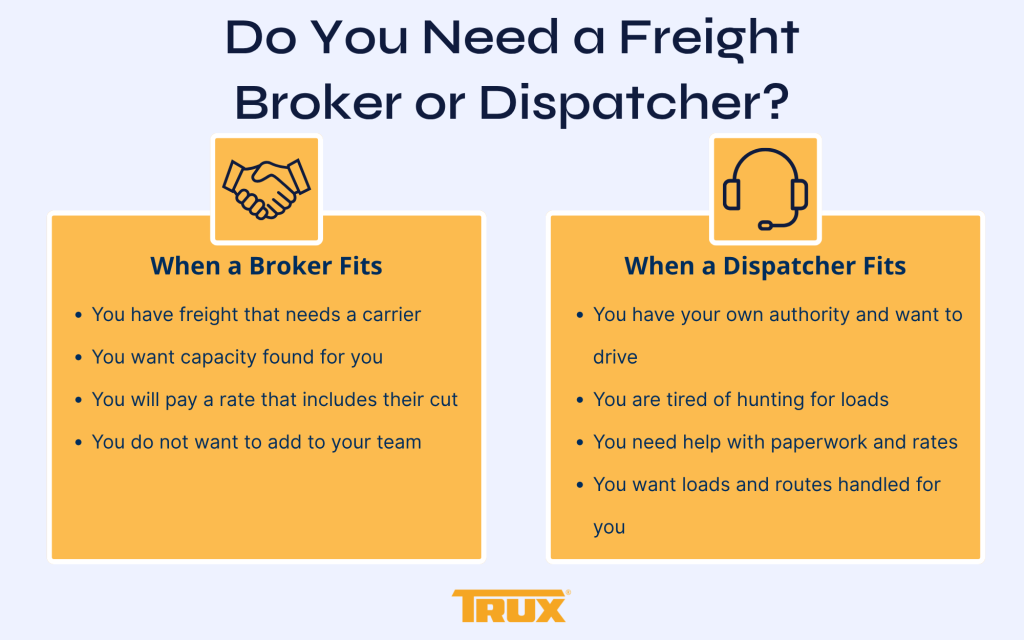
When a Broker Fits
A broker is the right call when you have freight that needs to be matched with a carrier, and you want someone to find that capacity without managing carriers yourself. It works best when you are comfortable paying a rate that includes the broker’s cut, and you would rather move loads without bringing anyone onto your own team. Before working with one, confirm they hold active broker authority with the FMCSA, carry the required surety bond, which you can verify in the FMCSA database, and have a track record of paying carriers on time and being clear about rates and responsibilities.
When a Dispatcher Fits
A dispatcher is the right call when you have your own motor carrier authority, want to stay focused on driving, and are tired of spending hours hunting for loads instead of hauling them. It works best when you need help with administrative tasks and rate negotiations, or want route planning and load board searching handled for you. Before hiring one, confirm they charge clear, upfront pricing, either a flat fee or a percentage, communicate honestly and consistently, have experience with carriers like yours, and give a straight answer on whether they hold broker authority and how they handle money.

The Bottom Line
A broker works for the shipper and earns the difference on the freight. A dispatcher works for you, finds your loads, and gets paid by you. For most owner operators and small carriers, that makes a dispatcher the one to hire and a broker the one to vet before you haul their freight. Knowing the difference helps you keep the right people in the right roles and protect what you earn.
Getting freight where it needs to go depends on more than the right loads. It also depends on the driver being rested and the truck and its cargo sitting somewhere secure between runs. That starts with a safe place to park. TRUX Parking offers professional drivers gated lots with 24/7 surveillance across the United States, so your rig and freight stay protected, plus simple online booking and instant access instructions.
Find secure TRUX Parking in:
- Georgia
- Tennessee
- Alabama
- Texas
- Missouri
- Idaho
- Mississippi
- Arkansas
- Oklahoma
- Ohio
- California
- Iowa
- Pennsylvania
- North Carolina
- Florida
- Oregon
- Nevada
- South Carolina
- Arizona
- Washington
You handle the loads. Let TRUX handle the parking. Reserve your spot online today and get instant access instructions, so your next stop is one less thing to worry about. Your home away from home is ready when you are.