



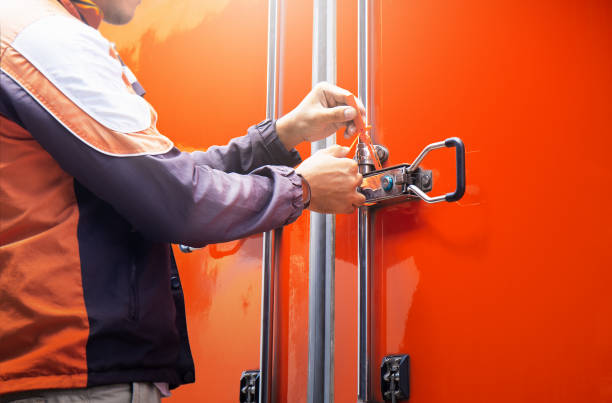
At a Glance: Cargo theft is climbing fast, and thieves have changed how they work. Instead of breaking into trailers, many now use fraud, fake credentials, and stolen carrier identities to take a load before a truck ever moves. Losses have climbed to record highs even as the number of incidents holds steady, because criminal groups now chase higher-value freight. Professional drivers can lower the risk by verifying every load, staying with the trailer, and parking in a secure, gated lot.
Ask any professional driver about their worst nights on the road, and a stolen load ranks near the top. The freight on your trailer is your responsibility, and a good part of that risk comes down to where you leave the rig. A loaded trailer sitting in an open lot or on a dark shoulder is an easy target, and thieves know exactly where drivers tend to stop for the night. This guide breaks down how cargo theft actually works now, the warning signs worth knowing, and where to park so your freight stays where you leave it.
Why Cargo Theft Losses Are Surging
Cargo theft is not new, but the scale has shifted fast. Verisk CargoNet’s 2025 analysis put estimated losses at nearly $725 million, a 60 percent jump from the year before, even though the count of supply chain crime events barely moved.
The reason is simple: cargo thieves got pickier. The average value per theft rose to $273,990, up 36 percent, as organized crime groups chased high-value freight over easy targets. Metals theft alone rose 77 percent, and California stayed the most affected state in the United States. Food, metals, and electronics top the target list, and freight hubs like Atlanta, Dallas, and Los Angeles see the heaviest activity.
For a truck driver, the takeaway is simple: your load is worth more to a thief than it used to be. Large-scale theft rings now run like businesses, and the financial losses ripple across the U.S. from carriers to shippers to the checkout line. Supply chain security is no longer just a warehouse concern. It follows the freight onto the road.
The Two Main Types of Cargo Theft
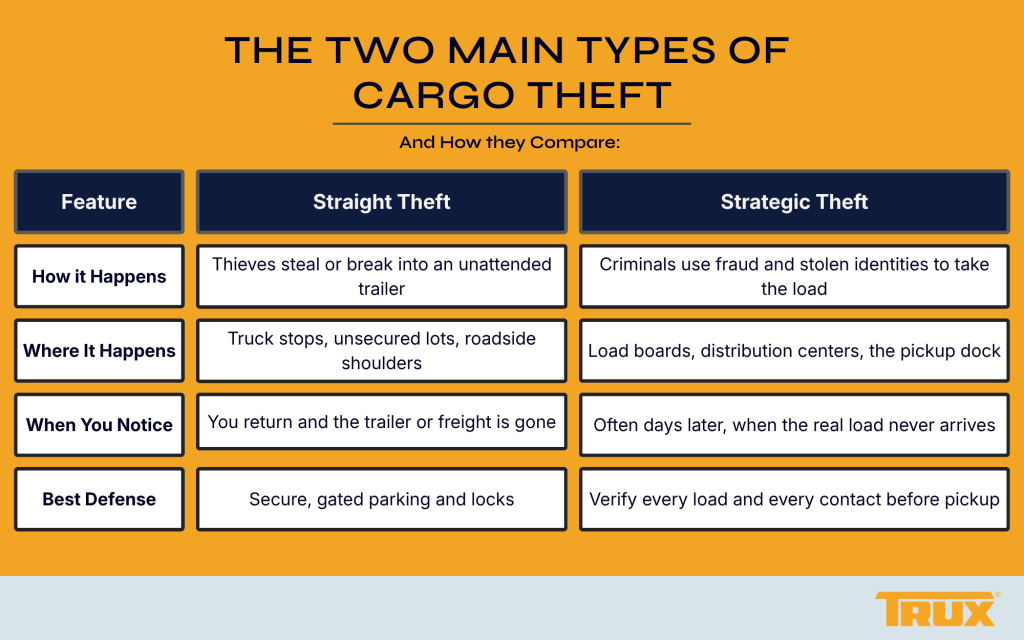
Not every theft looks the same. It falls into two broad types, and knowing the difference helps you spot each one.
Straight Theft
Straight theft is the old-school version. A trailer sits unattended at a truck stop or on a dark shoulder, and it is gone by morning. It still happens every day across the country, and it is the reason why where you park matters so much. Cargo thieves look for the path of least resistance, and an unwatched rig in an open lot is exactly that.
Strategic Cargo Theft
Strategic cargo theft, sometimes called theft by deception, is the fastest-growing method that CargoNet and insurers point to. Instead of cutting a lock, cargo thieves pose as a legitimate carrier and drive the freight away in plain sight. Fictitious pickups jumped from an average of 66 a year between 2012 and 2022 to 576 in 2023, according to Travelers.
These schemes run on identity theft. A criminal enterprise clones a real carrier’s DOT and MC numbers, then uses that stolen identity to book loads. In a double-brokering scam, a criminal accepts a load, hands it to an unwitting motor carrier, collects the payment, and vanishes. By the time the cargo theft incident surfaces, the freight is long gone, and the trail is cold. Much of this criminal activity happens online, where criminal networks watch load boards and impersonate dispatchers or brokers. The stolen loads are resold fast, often feeding a market tied to other illegal activities. If you work with brokers, knowing how brokers and dispatchers actually operate makes it easier to spot a setup that does not add up.
Red Flags to Catch Before You Roll
Most strategic theft starts before your wheels turn, so the paperwork is where you catch it. Watch for these signals:
- A rate that looks too good for the lane
- Last-minute changes to pickup contacts, phone numbers, or email domains
- A DOT or MC number that does not match the company on the tender
- Pressure to skip normal check-in steps or verification
- A broker or shipper who only answers from a free email account
When something feels off, slow down. Verify the carrier’s authority in the FMCSA SAFER system using the DOT number before you accept the load. A two-minute check beats a stolen trailer and a report to law enforcement.
Cargo Theft Prevention on the Road
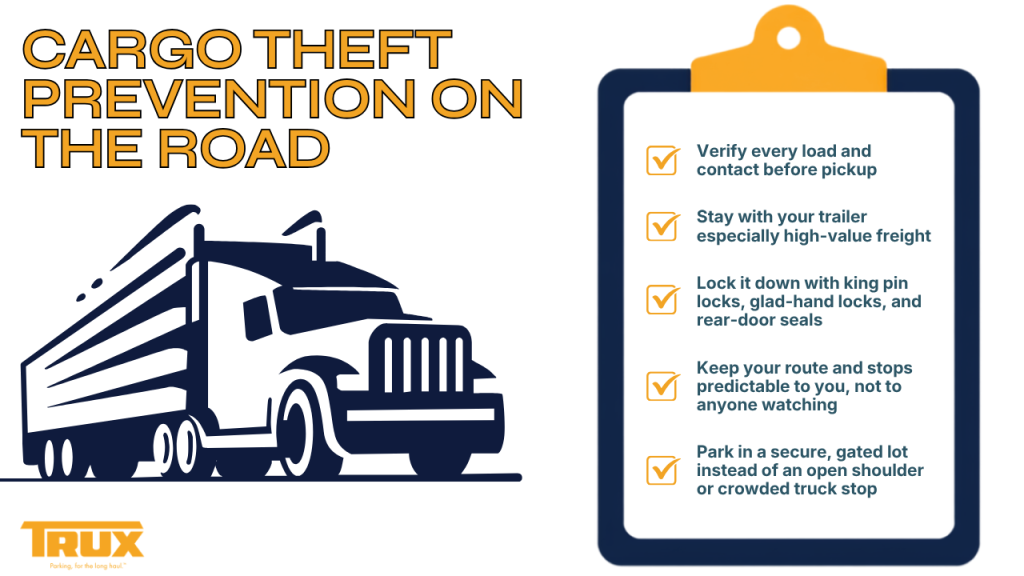
Once you are hauling, a few simple habits close the gaps cargo thieves count on:
- Verify every load and every contact before pickup, every single time, and stay with your trailer when you can, especially with high-value freight.
- Lock it down with king pin locks, glad-hand locks, and rear-door seals, and keep your route and stops predictable to you, not to anyone watching.
- Do not post your load, route, or freight details on public social media, and park in a secure, gated lot instead of an open shoulder or crowded truck stop.
Simple cargo security measures like these will not make a truck driver invisible to a criminal enterprise, but they make you a much harder target.
If a load does go missing, move fast. Report it to local law enforcement and your carrier right away, because the odds of getting the freight back are highest in the first 24 hours and drop off quickly after that. Then loop in your insurance provider and document everything you have, from the bill of lading to the last place you saw the trailer. Recovery is never a sure thing, but quick, detailed reporting gives investigators their best shot and protects you if the load is gone for good.
Where You Park Changes Everything
You can do everything right and still lose the freight to straight theft if you park somewhere unsafe. An unattended trailer in a dim, open lot is exactly the opening straight theft criminals look for. Public truck stop spaces fill up fast at night, and a random shoulder leaves your rig exposed for hours while you sleep.
This matters even more during long rest periods. If you are parked for a 34-hour restart or a longer layover, that trailer sits still for a day or more. That is a long time for freight to wait in a spot with no gate, no lights, and no cameras. A secure lot turns that dead time into real protection instead of a gamble.
Park Secure with TRUX Parking
TRUX Parking gives professional drivers a safer place to leave a truck and trailer. Every location has gated access, 24/7 cameras, industrial lighting, and perimeter fencing, so your freight is not sitting out in the open. Booking is done online with instant access instructions, and rates are simple daily or monthly with no contracts or hidden fees. Some lots also add Wi-Fi, trash service, and on-site diesel mechanics for the longer stops.
Secure parking will not stop every theft scheme on its own. What it does is take away the easiest opening thieves have: an unwatched trailer in an unsecured spot. Pair careful load verification with a gated lot, and you close the two biggest gaps cargo thieves rely on.
Find secure TRUX Parking in:
- Georgia
- Tennessee
- Alabama
- Texas
- Missouri
- Idaho
- Mississippi
- Arkansas
- Oklahoma
- Ohio
- California
- Iowa
- Pennsylvania
- North Carolina
- Florida
- Oregon
- Nevada
- South Carolina
- Arizona
- Washington
You handle the loads. Let TRUX handle the parking. Reserve your spot online today and keep your freight behind a locked gate. Your home away from home is ready when you are.