

At a Glance: Grants for trucking companies are usually tied to a specific purpose, like upgrading equipment, training drivers, or cutting emissions. A few cash-style grants and contests exist, but they’re competitive and limited. The most practical path is to start with true grants, then look at fleet incentives and financing options that fit your operation.
Grant Programs for Trucking Companies
True business grants that put cash in your pocket without strings attached are rare in the trucking industry. Most come from private foundations or nonprofit organization sponsors running annual contests. The competition is steep, and winners often have compelling stories or unique business angles.
Still, these programs exist. If you qualify, they’re worth the time to apply.
NASE Growth Grants
The National Association for the Self-Employed offers Growth Grants up to $4,000 to members. You must hold an active NASE membership to apply. The grant program supports small business owners with documented business needs like marketing, equipment, or hiring. As an owner operator, tie your request to clear business use when applying. Membership runs about $12 per month.
Nav Small Business Grant
Nav has historically offered a $10,000 small business grant, but the program is currently paused. The application process was straightforward when active. Check Nav’s website for reopening updates and current application deadlines. A trucking company with a clear growth plan should watch for announcements.
Amber Grant and Other Private Small Business Grants
WomensNet awards three $10,000 Amber Grants each month to women-owned businesses. They also offer year-end awards, but the amounts and rules published each year vary by program, so confirm the current details before you apply. Other private foundations run similar programs throughout the year. These business grants don’t restrict by industry, so trucking qualifies. Search for grants by demographic (veteran, minority, women-owned) to find options tailored to your situation.
Veteran/Minority Programs and Pitch Competitions
Several grant opportunity programs target underserved communities, including veteran and minority business owners. Organizations like Second Service Foundation and Hello Alice run periodic funding rounds. Local pitch competitions hosted by economic development groups also award cash prizes. Check your region’s small business events calendar for upcoming contests.
Government Grants with Indirect Access
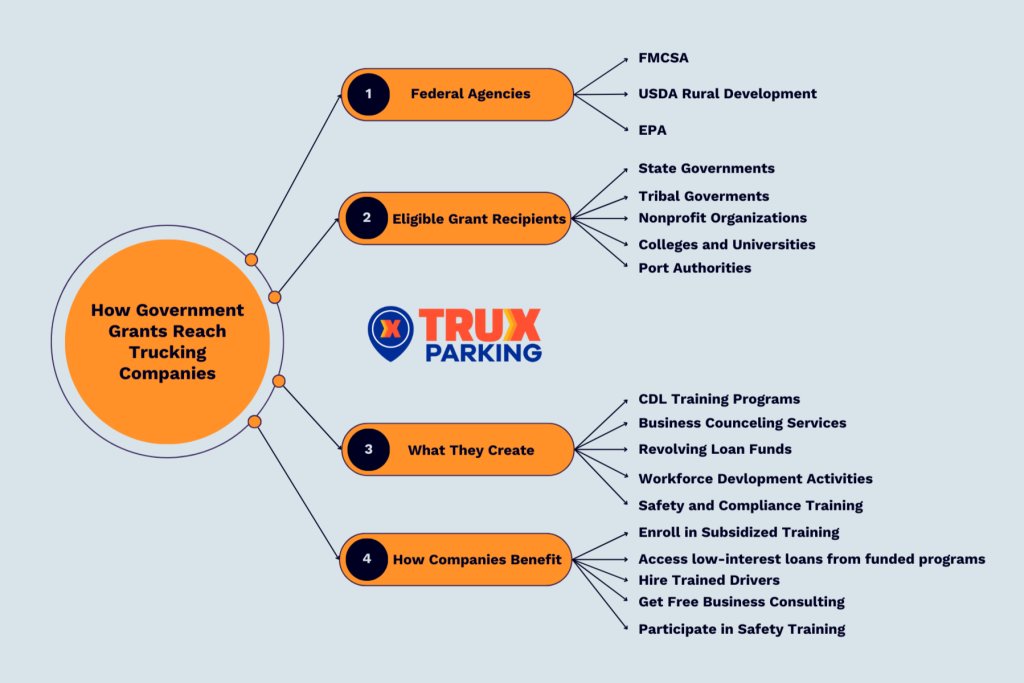
Some federal grants provide real funding for trucking-related programs, but for-profit carriers cannot apply directly.
The Federal Motor Carrier Safety Administration runs grant programs including CDLPI (driver licensing), CMVOST (operator safety training), and High Priority grants. Eligibility is limited to state governments, tribal governments, law enforcement agencies, colleges, and nonprofit organizations. Trucking companies benefit from the workforce development and training programs these grants fund at eligible institutions.
USDA Rural Development offers Rural Business Development Grants (RBDG) for economic development in rural areas. Eligibility is limited to public bodies, federally recognized tribes, and nonprofit organizations serving rural communities. These grants fund business counseling, technical assistance, and revolving loan funds that trucking operations can access through the recipient organizations. Contact your regional rural development office to find programs in your area.
Loans, Financing, and SBA Programs
When grant funding isn’t available or doesn’t cover your needs, financing options fill the gap. These aren’t free money, but they provide financial resources to grow or stabilize your operation.
SBA Loans and Microloans
The Small Business Administration backs several loan programs for trucking operations. The 7(a) loan program offers up to $5 million with favorable terms. SBA loans typically feature lower interest rates and longer repayment periods than conventional loans.
Microloans up to $50,000 work well for smaller needs like repairs or a down payment on equipment.
SBA 8(a) and Contracting Support
The 8(a) program helps disadvantaged business owners compete for government contracts. It’s not a grant or loan program. Instead, it provides technical assistance and preferential access to federal contracting opportunities. If your trucking company qualifies and wants to pursue government freight contracts, this program can open doors.
Equipment Financing and Leasing
Equipment financing lets you spread truck purchases over time. The truck itself serves as collateral, making approval easier for newer businesses. Leasing offers lower monthly payments and works well if you prefer upgrading equipment regularly.
Business Line of Credit
A line of credit provides flexible access to working capital. Draw funds when you need them for fuel cards, repairs, or slow payment cycles. You only pay interest on what you use.
Invoice Factoring
Factoring companies buy your unpaid invoices at a discount, giving you cash immediately. This solves the 30 to 90-day payment gap common in freight. It’s not a loan, so approval depends on your customers’ credit rather than yours.
Fleet Upgrade Grants and Incentives for Big-Dollar Projects
The largest grant funding available to trucking operations comes through equipment upgrade programs. These target emissions reduction and alternative fuel adoption. If you’re planning to buy new trucks or retrofit existing ones, this is where real money lives.
How These Programs Pay
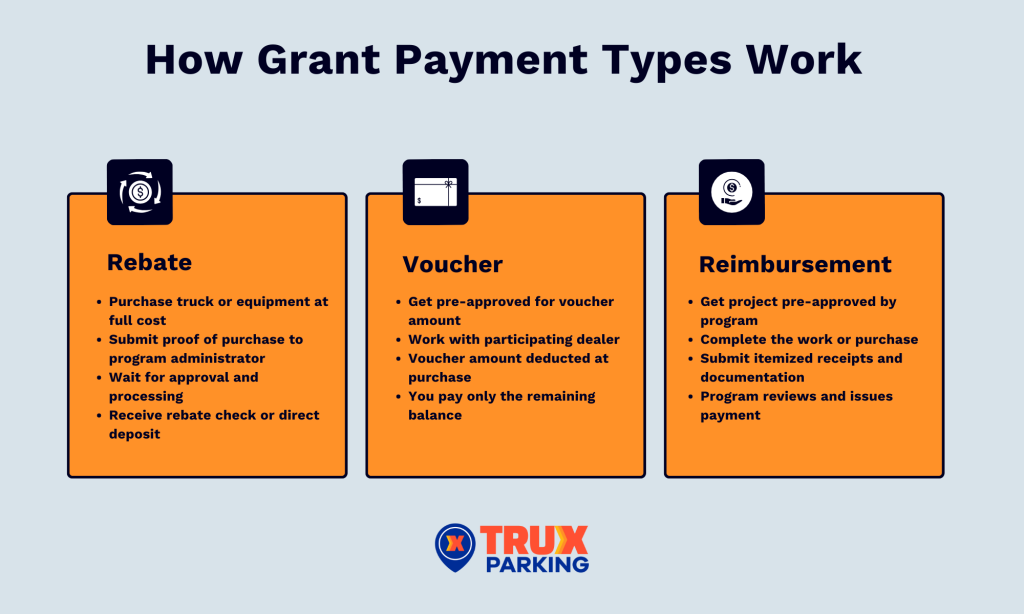
Not all incentives work the same way. Understanding the payment structure helps you plan cash flow:
- Rebates: You pay full price upfront, then receive money back after purchase
- Vouchers: Applied at the point of sale to reduce the purchase price immediately
- Reimbursements: You submit receipts after project completion for partial or full repayment
Voucher programs are easiest on working capital since you don’t front the full cost.
Clean Diesel Replacement and Retrofit Programs
The Diesel Emissions Reduction Act (DERA) provides federal grants through the EPA. Funds go toward replacing old diesel trucks or adding emissions-control equipment. Many states also have their own clean fleet programs funded by the Volkswagen settlement. These state programs often cover a significant portion of project costs, though the exact share depends on your state and project type.
California, Texas, and New York run some of the largest programs. Check your state environmental agency’s website for current offerings.
Zero-Emission Truck Vouchers
California’s Hybrid and Zero-Emission Truck and Bus Voucher Incentive Project (HVIP) offers point-of-sale discounts on electric vehicle purchases. HVIP/ISEF Class 8 vouchers are often around $120,000 base and up to $330,000 for qualifying small businesses. Fuel-cell trucks can qualify for higher amounts. Amounts vary by category and funding round, so check current funding tables. HVIP is generally first-come, first-served, with adders that can benefit small fleets and disadvantaged communities.
New York runs NYTVIP with Class 8 vouchers starting at $200,000 and potential bonuses pushing totals above $300,000. Vouchers are distributed on a first-served basis, so timing matters.
Port and Drayage Funding
The EPA’s Clean Ports Program directs funding toward zero-emission equipment at ports. Port authorities also run their own incentive programs for drayage operators. Carriers typically access these funds through partnerships with ports or local governments rather than applying directly. If your trucking business serves port facilities, ask about current incentive programs.
CMAQ and Local Air-Quality Programs
The Congestion Mitigation and Air Quality Improvement Program (CMAQ) funds flow through metropolitan planning organizations and government agencies. Money typically reaches trucking operations via state DOTs, MPOs, or local air quality districts rather than direct carrier applications. Contact your regional planning organization to ask about freight-related projects you could participate in.
What You’ll Need to Apply
Most grant application submissions require similar documentation:
- Business registration and tax ID
- Business plan (especially for startup grants)
- Fleet inventory with vehicle ages and VINs
- Financial statements or tax returns
- Proof of insurance
- Description of how you’ll use the grant funds
Prepare these documents before an application deadline hits. Many programs close quickly once announced. Government grants especially move fast, and missing deadlines means waiting for another funding cycle.
Find Reliable Parking With TRUX
Funding helps, but day-to-day logistics still decide whether routes stay profitable. TRUX Parking makes it easier to plan stops with dependable truck-and-trailer parking built for commercial rigs. Skip the nightly scramble, reduce the risk of tickets or unsafe lots, and give truck drivers a place they can count on when hours are tight. Find a TRUX location along your lanes and reserve parking before your clock runs out.
Visit our secure facilities in: